Baby Gear
Owlet Dream Sock vs. Masimo Stork: Do Smart Socks Work?
Both devices are now FDA-cleared, but the AAP is clear: neither prevents SIDS. Here is what each actually does, where the accuracy limits lie, and who genuinely benefits.
Clinically reviewed · June 2026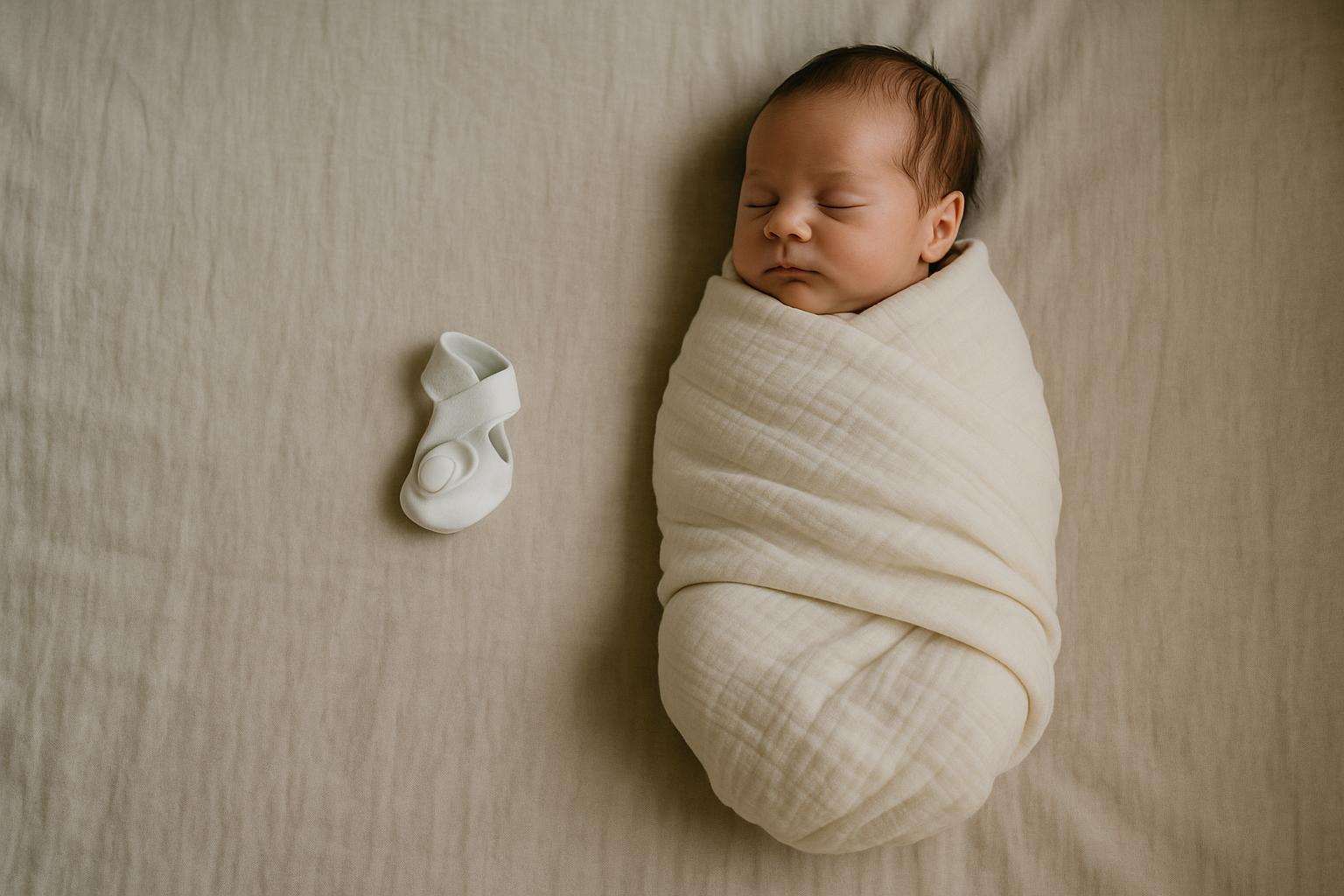
Both the Owlet Dream Sock ($299.99) and Masimo Stork ($249–$549) are FDA-cleared OTC infant pulse oximeters that track SpO2 and pulse rate in real time. Neither device prevents SIDS — the AAP is unambiguous on that point — but both can provide clinically meaningful monitoring for families whose pediatrician has specifically recommended home pulse oximetry.
For most of the 2020s, parents searching for "baby oxygen monitor" landed in a legally murky zone. Owlet's original Smart Sock had no FDA clearance, generated passionate consumer loyalty, and received an FDA warning letter in 2021 asserting it was an uncleared medical device — resulting in a market withdrawal. By January 2024 the landscape had changed: both Owlet and Masimo had completed FDA clearance processes and launched competing over-the-counter products. The question for parents today is no longer whether these devices are legal but whether they do what most buyers expect them to do.
How did each device get FDA clearance, and does the pathway matter?
The two clearance pathways are procedurally different but arrive at the same regulatory category.
The Owlet Dream Sock received FDA De Novo clearance in January 2024. De Novo is the pathway for novel devices — those without a legally marketed predicate — that pose low to moderate risk. De Novo classification creates a new device type and, importantly, establishes a predicate that future similar devices can cite in 510(k) submissions. Owlet's De Novo designates the Dream Sock as a Class II medical device for OTC use by healthy infants aged 1 to 18 months weighing 6 to 30 lbs.
The Masimo Stork used the 510(k) pathway — predicate-based clearance — receiving an initial clearance in December 2023 for prescription use and a second 510(k) clearance on May 6, 2024, for OTC use with healthy infants 0–18 months weighing 6 to 30 lbs. Masimo cited its own hospital-grade Signal Extraction Technology (SET) — the pulse oximetry system found in more than 10 million NICU monitors and 9 of the top 10 U.S. hospitals — as the technological foundation. The 510(k) route is common for devices with an established predicate; it does not imply a lower bar, just a different evidentiary path.
For parents, the practical takeaway is this: both are Class II FDA-cleared medical devices for OTC use. Neither clearance certifies that the device prevents SIDS or any specific health outcome.
Owlet also separately offers BabySat, a prescription-only version cleared by the FDA in June 2023, which allows clinicians to set custom alarm thresholds for SpO2 and pulse rate for infants under physician monitoring. BabySat is not available OTC and represents a meaningfully different clinical tool than the consumer Dream Sock.
What does the accuracy data actually show — and where are the limits?
Both companies claim hospital-grade accuracy. The independent data is more nuanced.
Owlet states that the Dream Sock was clinically evaluated for SpO2 accuracy across all Fitzpatrick Scale skin tones (Types I–VI) under both motion and non-motion conditions, with results within ±3% of arterial blood gas measurements — the gold standard for SpO2 validation. That ±3% figure is the industry benchmark for pulse oximeter accuracy per ISO 80601-2-61.
An independent observational study published on PubMed compared an earlier Owlet Smart Sock 3 against a hospital-grade Masimo SET pulse oximeter in 28 preterm or low-birthweight infants (1.7–2.5 kg), collecting over 21 hours of data. Key findings:
- Heart rate: Strong correlation (r = 0.98, p < 0.001), mean difference of −1.3 bpm — clinically excellent.
- SpO2: Accuracy declined at lower oxygen saturation values and during motion — a meaningful caveat for infants with genuine oxygen-level events.
A separate and growing concern in the peer-reviewed literature: pulse oximeters as a category — not Owlet specifically — may overestimate SpO2 in individuals with darker skin tones during hypoxic states. This is a real and documented limitation of photoplethysmography at lower saturation levels. Owlet's clinical evaluation across Fitzpatrick Types I–VI addresses this in its validation methodology; independent replication of those results in home-setting studies is limited as of mid-2026.
Masimo's Stork brings hospital-grade SET technology — which is specifically engineered to reduce motion artifact and is validated across diverse populations in clinical settings — but independent peer-reviewed accuracy data specific to the OTC Stork in the home setting with healthy term infants also remains limited. Hospital-grade performance in the NICU does not automatically translate to identical performance when a healthy infant is rolling over on a crib sheet.
| Feature | Owlet Dream Sock | Masimo Stork (OTC) |
|---|---|---|
| FDA clearance type | De Novo (Class II), Jan 2024 | 510(k) (Class II), May 2024 |
| OTC age range | 1–18 months, 6–30 lbs | 0–18 months, 6–30 lbs |
| Metrics tracked | SpO2, pulse rate, sleep trends | SpO2, pulse rate, skin temp, room temp/humidity |
| Retail price | $299.99 (sock only) | $249–$549 (boot; varies by bundle) |
| Subscription required? | No (Owlet360 optional at $9.99/mo) | No (optional plan for extended features) |
| Prescription tier | BabySat (Rx only, custom thresholds) | Initial Rx clearance Dec 2023; OTC added May 2024 |
| Camera bundle available? | Yes — Dream Duo at $399 | Yes — Vitals+ bundle with 2K QHD camera |
| Oximetry technology | Proprietary pulse oximetry | Masimo SET (hospital-grade signal extraction) |
| Independent accuracy studies | One PubMed study (Smart Sock 3, not Dream Sock) | Extensive hospital literature; limited home-setting data |
What does the AAP actually say — and why does it matter for your buying decision?
This is the section most product reviews bury or skip. It should come first.
The American Academy of Pediatrics 2022 Safe Sleep Policy Statement — the current standing guidance — states explicitly: "Home cardiorespiratory monitors should not be used to reduce the risk of SIDS."
The AAP's reasoning is not that the devices malfunction — it is that there is no evidence they reduce SIDS incidence. SIDS (Sudden Infant Death Syndrome) remains unexplained in individual cases, and the physiological pathway(s) are not yet fully characterized. A pulse oximeter reading SpO2 within the device's measurement window cannot detect all relevant physiological events, and even catching a true low-oxygen event does not guarantee a successful intervention.
The AAP and Nationwide Children's Hospital both document a concrete harm: false alarms. Oxygen saturation naturally decreases during deep sleep in healthy infants — this is normal physiology. Consumer pulse oximeters alert on thresholds calibrated for awake or lightly sleeping states. Multiple documented cases exist of parents bringing infants to emergency departments based on low Owlet readings that proved clinically normal on hospital-grade measurement. The resulting sleep deprivation and anxiety burden on parents is real and measurable.
Pediatricians writing in Contemporary Pediatrics acknowledge the appeal while reinforcing the same guidance: the interventions with demonstrated SIDS risk reduction are behavioral — firm, flat sleep surface; room-sharing without bed-sharing; back-to-sleep positioning; pacifier use; avoiding smoke exposure. None of these requires a $300 wearable.
Who does benefit? Families with medically complex infants — preterm babies, infants with congenital cardiac or pulmonary conditions, those with documented apnea — whose pediatrician has specifically recommended home pulse oximetry. For those families, the prescription Owlet BabySat or a physician-supervised Masimo Stork is the more clinically appropriate tool, with customized alarm thresholds set in collaboration with the care team.
Ask your pediatrician one direct question: does my specific baby have a documented medical indication for home pulse oximetry? If yes, ask whether BabySat or a prescription Stork with custom thresholds is covered by insurance. If no, redirect the $300 toward a FHSS video monitor, which provides eyes and ears without the false-alarm burden — and reinvest the time saved in the safe-sleep environment setup that the evidence actually supports.
This article is general information, not medical advice. If you have concerns about your infant's breathing, oxygenation, or sleep, speak directly with your pediatrician or call your local after-hours nurse line.
Frequently asked
What is the difference between Owlet Dream Sock and Masimo Stork's FDA clearance?
The Owlet Dream Sock received FDA De Novo clearance in January 2024 — a pathway for novel, lower-risk devices that had no existing predicate on the market. De Novo status places it in Class II. The Masimo Stork received initial FDA clearance in December 2023 for prescription use, followed by a second 510(k) clearance in May 2024 for over-the-counter use, using Masimo's existing hospital-grade SET pulse oximetry as the predicate device. Both are FDA-cleared Class II medical devices approved for healthy infants aged 0–18 months weighing 6 to 30 lbs. The procedural pathway differs, but both have passed the same regulatory threshold for OTC consumer use. Neither clearance implies the device prevents SIDS or any other infant condition. Sources: Owlet Investor Relations; Masimo Investor Relations.
How accurate are smart sock baby monitors for SpO2 readings?
Owlet states the Dream Sock was evaluated for SpO2 accuracy across all Fitzpatrick Scale skin tones (Types I–VI) under motion and non-motion conditions, claiming accuracy within ±3% of arterial blood gas measurements. An independent PubMed observational study comparing an earlier Owlet Smart Sock against a Masimo SET hospital oximeter in 28 preterm infants found strong heart rate correlation (r = 0.98) but noted SpO2 accuracy declined at lower saturation values and during movement. A growing body of literature also documents that consumer pulse oximeters — regardless of brand — may overestimate SpO2 in infants with darker skin tones during hypoxic states, a limitation not unique to smart socks but relevant to home use. Masimo Stork uses the same Signal Extraction Technology found in 9 of the top 10 U.S. hospitals, which addresses motion artifact, but independent peer-reviewed accuracy data specific to the OTC Stork in healthy home-setting infants remains limited as of mid-2026.
Do Owlet or Masimo Stork prevent SIDS?
No. The American Academy of Pediatrics 2022 Safe Sleep Policy Statement is explicit: "Home cardiorespiratory monitors should not be used to reduce the risk of SIDS." The AAP cites the absence of evidence that these devices reduce SIDS incidence. The guidance also documents a documented clinical problem: false alarms prompt parents to bring infants to emergency departments based on low SpO2 readings that prove clinically normal — because oxygen saturation naturally decreases during deep sleep in healthy infants. Nationwide Children's Hospital echoes this guidance while acknowledging legitimate utility for medically complex infants under physician supervision. These devices are monitoring tools, not prevention tools. If you have a specific medical concern about your infant's oxygenation, speak with your pediatrician before purchasing — this is general information, not medical advice.
What does the Owlet Dream Sock cost, and do you need a subscription?
The Owlet Dream Sock retails at $299.99 and requires no subscription for basic live SpO2 and pulse rate readings plus real-time notifications. Owlet's optional Owlet360 plan at $9.99/month adds extended video storage (14 days), daily sleep reports, comparative data for similar-aged babies, and personalized morning health summaries. For most families, the base no-subscription tier covers the core monitoring function. Owlet also offers the BabySat, a prescription-only version (FDA-cleared June 2023) that allows clinicians to set custom SpO2 and pulse rate alarm thresholds for infants under physician monitoring. BabySat is distinct from the consumer Dream Sock and requires a prescription; its cost is typically covered by insurance when medically indicated. The Dream Duo bundle (Dream Sock plus Dream Sight camera) retails at $399.
What does the Masimo Stork cost, and what bundles are available?
Masimo Stork pricing ranges from $249 to $549 depending on the bundle tier as of mid-2026. The standalone boot sensor starts at the lower end; the Vitals+ bundle — which adds a 2K QHD camera designed for future edge AI features including face-down position detection — approaches the higher end. The Stork OTC boot monitors SpO2, pulse rate, and skin temperature, plus ambient room temperature and humidity. The flexible medical-grade silicone boot comes in three sizes to accommodate different infant foot proportions. Masimo positions Stork as bringing hospital-grade Signal Extraction Technology (SET) — used in more than 10 million NICU monitors annually — into the home setting. Sources: MassDevice; MedTech Dive. As with any medical device purchase, verify current retail pricing at checkout — prices fluctuate.
Who should consider a smart sock monitor, and who probably does not need one?
Families who may genuinely benefit include those with a medically complex infant (preterm baby, congenital heart condition, apnea history) whose pediatrician has specifically recommended home pulse oximetry — and for those families, the prescription Owlet BabySat or a physician-supervised Masimo Stork is the appropriate path, not the OTC tier. Families with healthy term infants who are primarily seeking SIDS reassurance are unlikely to reduce risk through these devices, and the AAP warns the false-alarm burden can significantly disrupt sleep and elevate parental anxiety. Pediatricians writing in Contemporary Pediatrics acknowledge the devices' appeal while reinforcing that evidence-based safe sleep practices — firm flat surface, room-sharing without bed-sharing, back-to-sleep — remain the only interventions with demonstrated SIDS risk reduction. This is general information; consult your pediatrician for personalized guidance.