 Prenatal Care & Testing
 A doula provides continuous physical, emotional, and informational support through labor — a role that's entirely separate from clinical care, and one that a robust body of Cochrane evidence links to fewer cesareans, shorter labors, and higher satisfaction.
By Maya Ellison, CNM · 10 MIN READ
 Prenatal Care & Testing
 Contractions before 37 weeks are frightening -- but knowing the warning signs, understanding how tocolytics buy critical time, and learning about progesterone for prevention can help you respond quickly and confidently.
By Priya Nair, MD · 10 MIN READ
 Prenatal Care & Testing
 An OB-reviewed color-and-texture guide to leukorrhea, infection warning signs, fluid leaks, and when to call your provider.
By Priya Nair, MD · 9 MIN READ
 Prenatal Care & Testing
 A calm, OB-reviewed guide to recognizing preeclampsia symptoms, understanding ACOG/SMFM risk-factor screening, starting low-dose aspirin at the right time, and monitoring blood pressure at home.
By Priya Nair, MD · 9 MIN READ
 Prenatal Care & Testing
 A clear, OB-reviewed guide to what placenta previa is, why painless bleeding is its defining warning sign, how the accreta spectrum connects, and why most cases require a planned cesarean.
By Priya Nair, MD · 9 MIN READ
 Prenatal Care & Testing
 GLP-1 medications like semaglutide (Ozempic, Wegovy) are paused before conception—here is the washout timeline, the medication-review process, and what your provider needs to know.
By Priya Nair, MD · 9 MIN READ
 Prenatal Care & Testing
 A clear-eyed look at the training, scope, and best-fit pregnancies for each provider type — so you can walk into that first appointment with confidence.
By Maya Ellison, CNM · 9 MIN READ
 Prenatal Care & Testing
 A positive NIPT is a probability, not a diagnosis. Here is what positive predictive value actually means for Down syndrome, trisomy 13, and sex chromosome results — and why confirmatory testing matters before any decision.
By Priya Nair, MD · 9 MIN READ
 Prenatal Care & Testing
 A clear, OB-reviewed guide to how cell-free DNA screening works, which chromosomal conditions it covers, when to do it, how accurate it is, and what a result—positive or not—actually means for your pregnancy.
By Priya Nair, MD · 9 MIN READ
 Prenatal Care & Testing
 A molar pregnancy is a rare form of gestational trophoblastic disease that looks like a pregnancy on a test but isn't. Here is what the evidence says about diagnosis, treatment, and trying again.
By Priya Nair, MD · 10 MIN READ
 Prenatal Care & Testing
 Light bleeding in the first trimester is common — but knowing how long it should last, and what patterns to watch for, helps you tell normal from something that needs a call to your provider.
By Priya Nair, MD · 8 MIN READ
 Prenatal Care & Testing
 Group B Strep colonizes up to 30% of pregnant women without causing symptoms — but it can be life-threatening for a newborn. Here is exactly what the 36-week swab involves, what a positive result means for your labor, and how intrapartum antibiotics protect your baby.
By Priya Nair, MD · 9 MIN READ
 Prenatal Care & Testing
 An OB-GYN-reviewed guide to how GDM is screened and diagnosed, what the one-step versus two-step glucose tests measure, how diet and lifestyle are the proven first line, and what the Dexcom G7 and ADA targets mean for your daily monitoring.
By Priya Nair, MD · 9 MIN READ
 Prenatal Care & Testing
 The term is outdated, but the biology is real. An OB-GYN breaks down the actual chromosomal, miscarriage, gestational diabetes, and hypertension statistics by age — and what changes in your monitoring plan.
By Priya Nair, MD · 10 MIN READ
 Prenatal Care & Testing
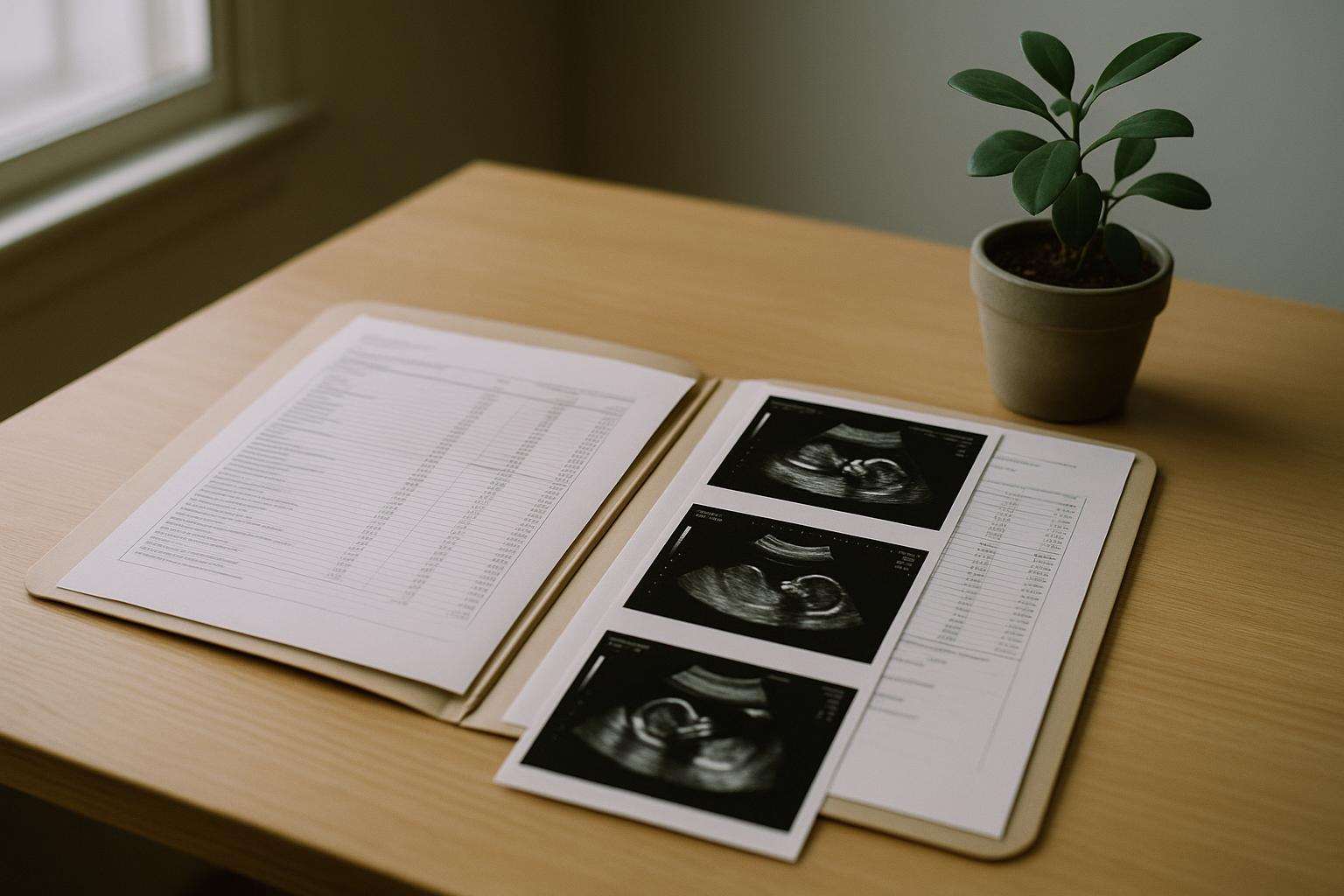
 Nuchal translucency plus bloodwork or a cell-free DNA blood draw — a board-certified OB-GYN breaks down the accuracy numbers, timing differences, insurance realities, and the one rule ACOG is firm about: pick one, not both.
By Priya Nair, MD · 9 MIN READ
 Prenatal Care & Testing
 A pregnancy that implants outside the uterus cannot survive—and can quickly become life-threatening. Here is how to recognize the symptoms early, what the shoulder-tip pain signal means, and when to call 911.
By Priya Nair, MD · 9 MIN READ
 Prenatal Care & Testing
 A body-map guide to the aches and cramps of early pregnancy — from ordinary round-ligament twinges to one-sided pain that needs a same-day call.
By Priya Nair, MD · 9 MIN READ
 Prenatal Care & Testing
 A cryptic pregnancy is a real pregnancy that escapes detection—by home tests, clinical exams, or the woman's own awareness—sometimes until labor begins. Here is the biology that makes it possible.
By Priya Nair, MD · 8 MIN READ
 Prenatal Care & Testing
 Intense itching on your palms and soles late in pregnancy isn't just uncomfortable — it may be intrahepatic cholestasis, a liver condition that raises fetal risk when bile acids climb too high. Here's how it's diagnosed, monitored, and managed.
By Priya Nair, MD · 9 MIN READ