Prenatal Care & Testing
Group B Strep in Pregnancy: The 36-Week Test and Antibiotics
Group B Strep colonizes up to 30% of pregnant women without causing symptoms — but it can be life-threatening for a newborn. Here is exactly what the 36-week swab involves, what a positive result means for your labor, and how intrapartum antibiotics protect your baby.
Clinically reviewed · June 2026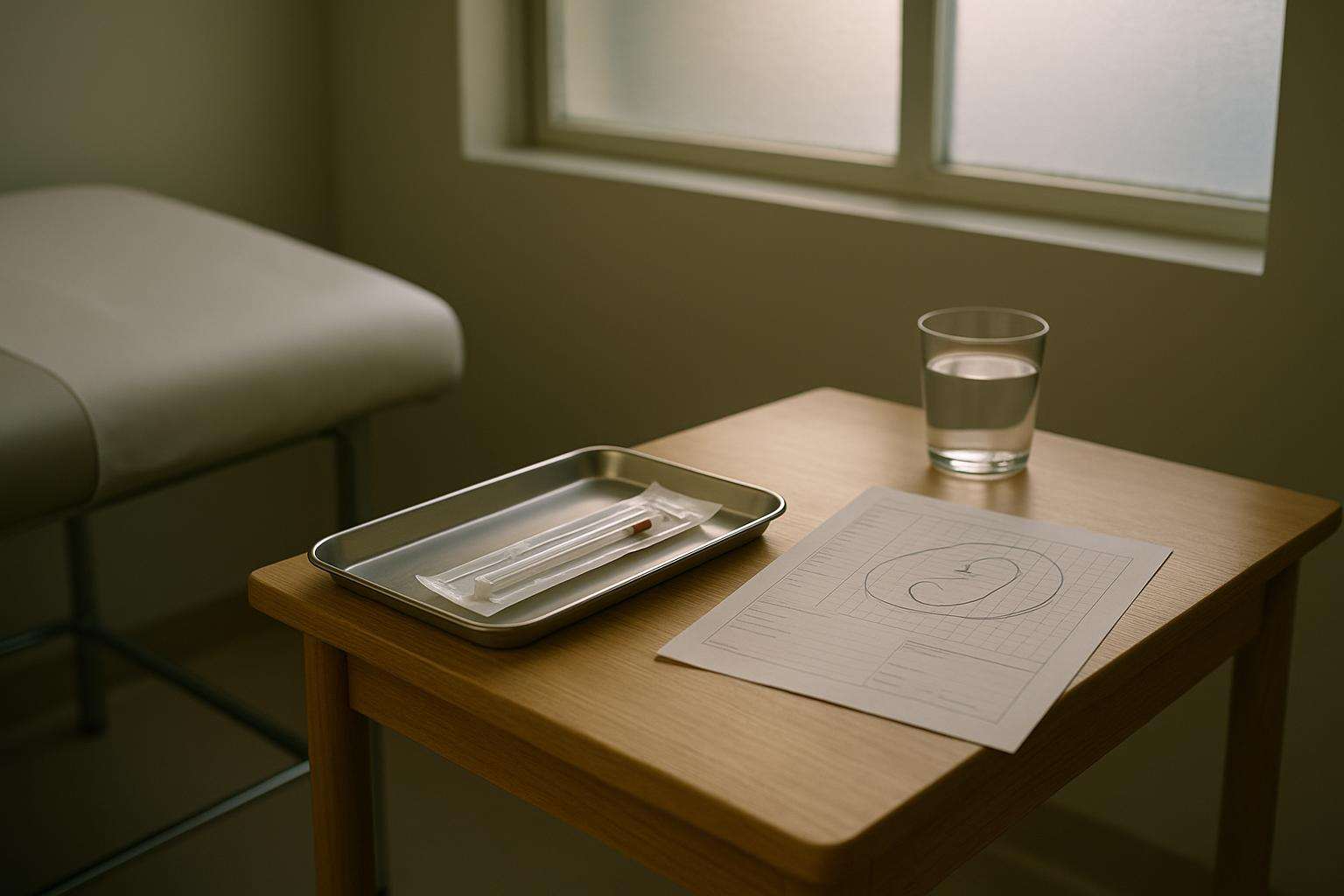
Between 10% and 30% of pregnant women carry Group B Streptococcus without symptoms. A vaginal-rectal swab at 36 to 37 weeks tells your care team whether you need IV antibiotics during labor — a protocol that has reduced neonatal GBS deaths by 60–80% and is one of the most effective preventive interventions in modern obstetrics.
If your provider has mentioned a "GBS swab" or "strep B test" coming up at your next appointment, you are not alone in wondering what it involves and what a positive result would mean for your birth. Group B Strep (GBS) is one of those pregnancy topics that sounds alarming on its face — bacteria, antibiotics, risk to the baby — but becomes far less frightening once you understand what the science actually says. This guide walks you through the screening process, the intrapartum antibiotic protocol, and a few of the nuanced questions that come up in integrative medicine circles around microbiome effects and prevention.
This article is general health information and is not a substitute for personalized medical advice. Talk to your OB, midwife, or care team about your specific situation, test results, and birth plan.
What Is Group B Streptococcus, and How Common Is It in Pregnancy?
Group B Streptococcus (Streptococcus agalactiae; GBS) is a gram-positive bacterium that colonizes the gastrointestinal and genitourinary tracts of many healthy adults without producing any symptoms. It is not a sexually transmitted infection and it is not something you "caught" — it is simply a common commensal organism that may or may not be present at any given time.
In pregnant women, GBS colonization rates in the United States range from 10% to 30% of the population, with some older CDC-linked epidemiological literature placing the range at 15–35%, depending on ethnicity, geographic region, and age. The key clinical challenge is that colonization is dynamic: up to 40% of women who test GBS-positive at prenatal screening may test negative at the time of delivery. This means your culture result at 36–37 weeks is a snapshot, not a permanent state — and it is why the timing of the swab matters so much.
The risk GBS poses is almost entirely to the newborn. Vertical transmission from a colonized mother to her baby during a vaginal delivery occurs in approximately 50–70% of unprotected births, and of those exposed neonates, 1–2% develop invasive early-onset disease (EOD) — meaning meningitis, pneumonia, or sepsis in the first week of life. Before universal screening and intrapartum antibiotic programs were established in the early 1990s, neonatal GBS mortality reached 55%. The U.S. rate of GBS EOD today is approximately 0.23 per 1,000 live births, down from roughly 1.8 per 1,000 in the pre-prevention era — a 60–80% reduction directly attributable to IAP programs, per NCBI StatPearls.
Why Is the GBS Swab Done at 36–37 Weeks, and What Does the Test Involve?
The timing of universal GBS screening is not arbitrary — it is calibrated to the biology of colonization and the logistics of term delivery. ACOG's Committee Opinion on GBS prevention (originally published February 2020 and endorsed by the AAP, ACNM, AWHONN, and SMFM) recommends universal vaginal-rectal swab (VRS) culture screening at 36 0/7 to 37 6/7 weeks of gestation. The rationale: a culture collected during this window remains valid — meaning its negative predictive value holds — for up to five weeks, covering deliveries through 41 0/7 weeks of gestation. The negative predictive value of a GBS culture within that five-week validity period is 95–99%, making it highly reliable for informing intrapartum management.
This window was deliberately updated from the previous 35–37 week window specified in the 2010 CDC guidelines. Moving the screening a week later reduces false-negative results at later gestational ages, when most deliveries occur. The practical effect is that your test is more likely to reflect your colonization status at the time you actually go into labor.
The procedure itself is quick and straightforward. A sterile swab is used to collect a sample from the outer vaginal area and then the rectum — both sites are required because GBS colonizes the lower GI tract and can be present rectally even when the vaginal culture is negative. Many practices allow self-collection, which some women prefer. The swab is sent to a microbiology lab for culture, and results typically return within 24 to 48 hours. There is no blood draw and no speculum involved.
Two sites, one swab: the vaginal-rectal swab is essential because GBS can be present in the rectal area when the vaginal culture is negative. Cultures collected at 36–37 weeks remain valid for up to five weeks, covering virtually all term deliveries.
Two circumstances make the swab unnecessary because IAP is already indicated regardless of culture result: (1) GBS bacteriuria detected at any colony count during the current pregnancy, which signals heavy colonization; and (2) a previous infant who had invasive GBS disease. In both cases, your provider will proceed directly to intrapartum antibiotics.
What Happens During Labor If You Test GBS-Positive?
A positive GBS culture does not change your birth plan in terms of delivery mode. It is not an indication for cesarean section. What it does is add one specific step: intravenous antibiotics at the onset of labor (or at membrane rupture), continued until delivery. The one exception: if you are having a planned pre-labor cesarean with intact membranes, IAP is not required because the baby is not passing through the birth canal.
The Antibiotic Protocol
The preferred agent, per ACOG guidance and StatPearls, is intravenous penicillin G:
- Loading dose: 5 million units IV at the start of labor or membrane rupture
- Maintenance: 2.5 to 3 million units IV every four hours until delivery
Penicillin is chosen specifically for its narrow antimicrobial spectrum — it targets GBS effectively without broadly disrupting other bacterial populations, reducing the risk of selecting for resistant organisms. For women with a penicillin allergy, the protocol stratifies by allergy severity and GBS susceptibility:
| Allergy Status | GBS Susceptibility | Recommended Agent | Dosing |
|---|---|---|---|
| No penicillin allergy | — | Penicillin G | 5 MU load, then 2.5–3 MU q4h IV |
| Low anaphylaxis risk | — | Cefazolin | 2 g load, then 1 g q8h IV |
| High anaphylaxis risk | Clindamycin-susceptible | Clindamycin | 900 mg q8h IV |
| High anaphylaxis risk | Clindamycin-resistant | Vancomycin | 20 mg/kg q8h IV, max 2 g/dose |
Clindamycin resistance among U.S. GBS isolates runs 20–30%, so if you have a penicillin allergy, your provider will request susceptibility testing on your culture well before your due date. Do not wait until labor begins to have this conversation.
The optimal duration of IAP before delivery for maximal neonatal protection is four or more hours. Studies show that two hours of penicillin exposure meaningfully reduces GBS vaginal colonization counts and decreases clinical neonatal sepsis diagnoses — so obstetric interventions such as amniotomy or augmentation should never be delayed solely to achieve four hours of coverage. Your labor team will balance timing appropriately.
Approximately 31% of U.S. obstetric patients currently receive intrapartum GBS antibiotics, and prophylaxis efficacy is estimated at 86–89% — a remarkably high figure for a preventive intervention in obstetrics.
Unknown GBS Status and Special Circumstances in Labor
If you arrive in labor with unknown GBS status — because your result has not returned, you had no prenatal care, or you delivered before 36 weeks — your care team will assess several risk factors:
- Gestational age below 37 weeks
- Intrapartum fever
- Membrane rupture lasting more than 18 hours
- A previous infant with invasive GBS disease
- Documented GBS colonization in a prior pregnancy
Under current ACOG guidance, women with documented GBS colonization in a prior pregnancy are now considered candidates for IAP even without a current positive culture — a meaningful update from previous recommendations. If any of the above risk factors are present with unknown status, IAP will generally be initiated.
What About the Effect on the Baby's Gut Microbiome?
This question comes up frequently among women who are tuned in to the microbiome conversation, and it deserves a straightforward answer.
Yes, intrapartum penicillin has measurable effects on the infant gut microbiome during a developmentally sensitive window. Research published in 2025 in PubMed Central found that Bifidobacterium longum — a species associated with healthy infant gut colonization — was persistently reduced in IAP-exposed infants through one year of age. A 2017 analysis in Scientific Reports found lower bacterial species richness in IAP-exposed newborns early in life, though most recovery occurred by 12 weeks.
These findings are worth knowing. They are also best kept in proportion: the neonatal infection risk that GBS early-onset disease poses — meningitis and sepsis with historically catastrophic mortality — appropriately governs the treatment decision when colonization is confirmed. Women who receive IAP are encouraged to discuss postnatal probiotic support for themselves and their infant with their pediatrician after delivery. This is a conversation to have with your care team — not a reason to decline recommended antibiotics.
Can Anything Reduce Your Risk of Testing GBS-Positive?
The research here is genuinely interesting but not yet practice-changing. A study of 1,860 vaginal swabs found that Lactobacillus crispatus — a keystone species in a healthy vaginal microbiome — was associated with significantly lower GBS colonization rates (OR = 0.5, p < 0.001). A 2026 systematic review and meta-analysis found antenatal probiotic use associated with a 44% reduction in odds of a positive GBS culture (OR = 0.56), though evidence across individual trials was variable and no probiotic is FDA-authorized for this indication.
These findings are hypothesis-generating, not practice-defining. GBS colonization is dynamic — nearly half of GBS-positive women may test negative at delivery — and no antenatal intervention currently reliably or consistently prevents colonization at the time of labor. Do not use these findings to modify your screening or IAP plan. Bring them to your provider for a thoughtful, individualized conversation about supporting vaginal microbiome health through pregnancy as a complementary strategy.
The GBS swab at 36–37 weeks is a brief test with a large payoff: it gives your labor team the information they need to protect your newborn during one of the most vulnerable hours of their life. If you test negative, that result provides 95–99% negative predictive confidence through your expected delivery date. If you test positive, the intrapartum antibiotic protocol is well-established, highly effective, and will not change how or where you deliver.
Frequently asked
What exactly is the Group B Strep test and when is it done?
The Group B Strep test is a simple vaginal-rectal swab (VRS) culture performed at 36 0/7 to 37 6/7 weeks of gestation. Your provider — or you, in some practices — gently swabs the outer vaginal area and then the rectum with the same swab. The sample is sent to a lab, where it is cultured for Streptococcus agalactiae (GBS). Results typically return within 24 to 48 hours. ACOG's 2020 Committee Opinion recommends this timing because a culture collected at 36–37 weeks remains valid for up to five weeks — covering deliveries through 41 weeks. The test is painless and takes less than a minute. This is general information; talk to your provider about your specific timing and any individual risk factors.
Is testing GBS-positive dangerous for me or my baby?
For you, GBS colonization causes no symptoms and no illness — it is simply the presence of a bacterium that lives harmlessly in the GI and genitourinary tracts of many adults. The risk is to the newborn. Before universal screening and intrapartum antibiotic prophylaxis (IAP) programs were established in the 1990s, neonatal GBS mortality reached 55%. Today, the U.S. rate of GBS early-onset disease (EOD) is approximately 0.23 per 1,000 live births — down from roughly 1.8 per 1,000 in the pre-prevention era, a 60–80% reduction attributable to IAP programs, according to StatPearls at NCBI. In absolute terms, neonates born to GBS-colonized mothers face roughly a 29-fold higher risk of EOD than those born to GBS-negative mothers. A positive test result does not predict problems — it simply tells your labor team to administer preventive antibiotics at the right time.
What antibiotics are used during labor if I test positive for GBS?
The preferred agent is intravenous penicillin G — a 5 million unit loading dose, then 2.5 to 3 million units every four hours until delivery. Penicillin is chosen for its narrow spectrum, which reduces the risk of selecting for antibiotic-resistant organisms. If you have a penicillin allergy, your protocol depends on your allergy risk level: low anaphylaxis risk — cefazolin 2 g IV loading, then 1 g every eight hours; high anaphylaxis risk with a clindamycin-susceptible GBS isolate — clindamycin 900 mg IV every eight hours; high anaphylaxis risk with clindamycin-resistant GBS — vancomycin 20 mg/kg IV every eight hours (capped at 2 g per dose), per NCBI StatPearls. Clindamycin resistance among U.S. GBS isolates runs 20–30%, so your provider will request susceptibility testing on your culture if you have a penicillin allergy. This is general information — your allergist and OB will determine the right choice for you.
What if I go into labor before my GBS results come back, or my status is unknown?
If your GBS culture result is not yet available when you go into labor, your provider will consider several risk factors to decide whether IAP is prudent: gestational age below 37 weeks, fever in labor, labor lasting more than 18 hours after membranes have ruptured, or a previous infant with invasive GBS disease. Under current ACOG guidance, women with documented GBS colonization in a prior pregnancy are now considered candidates for IAP even without a current positive culture — a change from previous recommendations. GBS bacteriuria detected at any colony count during the current pregnancy is also an independent IAP indication, as it signals heavy colonization. When in doubt, your labor team will weigh these factors and err on the side of protection.
Does a positive GBS test mean I need a C-section?
No. A positive GBS culture is not an indication for cesarean delivery. The protocol calls for intravenous antibiotics during labor — not a change in delivery mode. The one exception is a planned pre-labor cesarean with intact membranes: in that scenario, IAP is not needed because the baby is not passing through a colonized birth canal. If your membranes rupture before a planned cesarean, however, IAP should be administered. Approximately 31% of U.S. obstetric patients currently receive intrapartum GBS antibiotics, and the vast majority of those women deliver vaginally without complication, per NCBI StatPearls. Talk to your OB or midwife about your individual birth plan if you have questions about how a positive result affects your specific delivery preferences.
Can I reduce my chances of testing GBS-positive in the first place?
The short answer is: possibly, but no approach is proven enough to forgo the swab. GBS colonization is dynamic — up to 40% of women who test positive prenatally may test negative at delivery — so even a 'natural' reduction in colonization cannot replace the culture. That said, emerging research is genuinely interesting. A study of 1,860 vaginal swabs found that Lactobacillus crispatus — a dominant species in a healthy vaginal microbiome — was associated with significantly lower GBS colonization odds (OR = 0.5, p < 0.001), per a PubMed Central study. A 2026 systematic review found antenatal probiotic use associated with a 44% reduction in GBS-positive culture odds, though no probiotic is FDA-authorized for this indication. Do not use these findings to modify your screening or IAP plan — bring them to your provider for a personalized conversation.
Does getting IV antibiotics during labor affect my baby's gut microbiome?
It is a fair question, and the honest answer is: yes, measurably, though the clinical significance requires context. Intrapartum penicillin consistently reduces Bifidobacterium longum in the infant gut, and a 2025 study showed this reduction was sustained at one year of age, per PubMed Central. A 2017 Scientific Reports analysis found IAP-exposed infants had lower bacterial species richness early in life, though most recovery occurred by 12 weeks. Weighed against the risk GBS early-onset disease poses — which can cause meningitis, pneumonia, and sepsis — IAP when colonization is confirmed is the clearly appropriate choice. Women who receive IAP are encouraged to discuss postnatal probiotic support for themselves and their infant with their pediatrician after delivery. Decisions about IAP should never be altered without direct guidance from your delivering provider.