Birth & Postpartum
Epidural Explained: How It Works, Risks, Timing and Cost
A clinically clear guide to how epidural analgesia works during labor, when you can get one, what the real risks are, and what to expect on your hospital bill.
Clinically reviewed · June 2026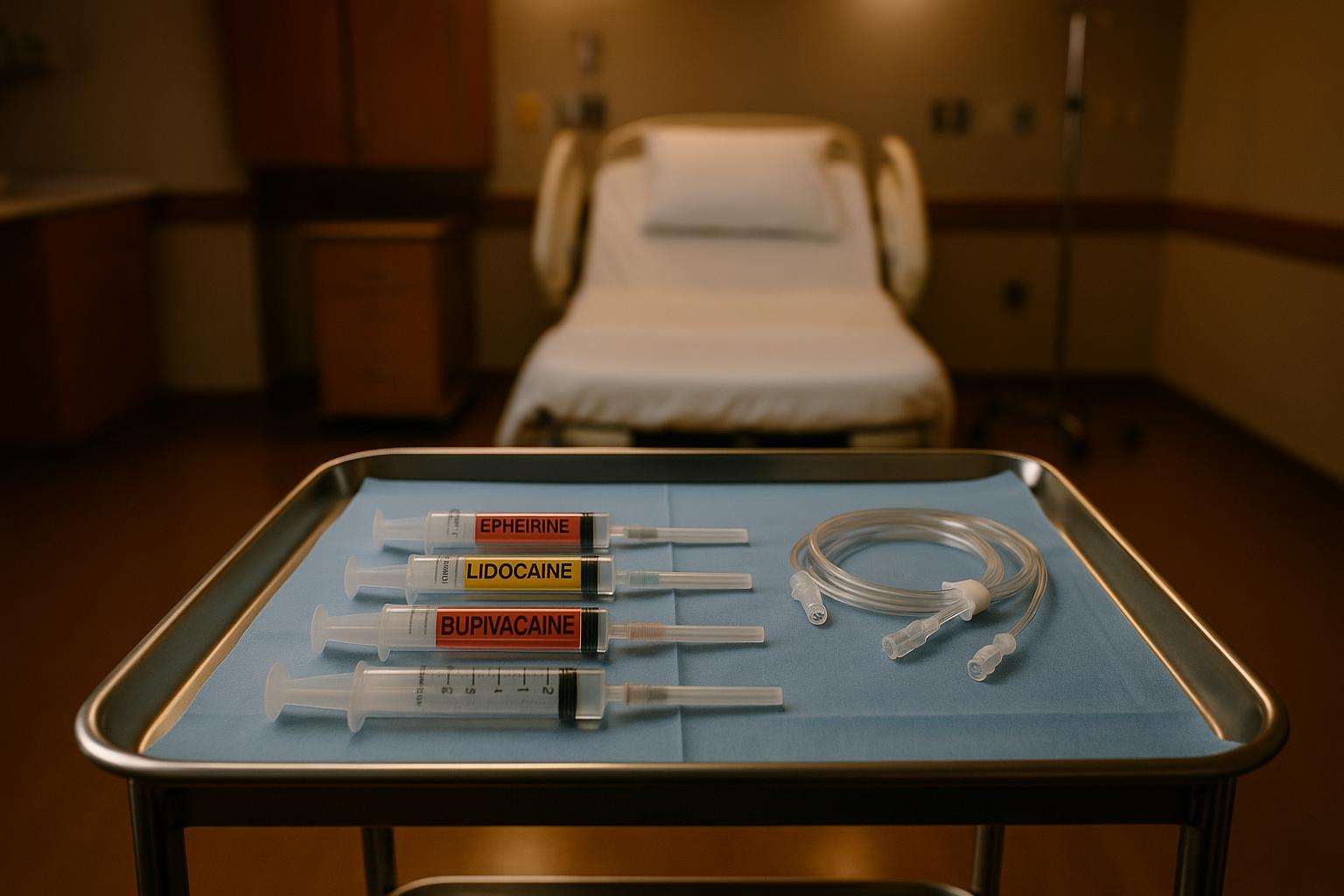
An epidural injects a local anesthetic plus low-dose fentanyl into the epidural space of your lumbar spine, blocking pain signals from the uterus and lower body. ACOG's 2024 guideline confirms it does not raise your cesarean risk, and you can request one at any point in active labor when an anesthesiologist is available.
Of all the decisions that come up in a birth plan, few generate more questions — and more conflicting advice from family, friends, and the internet — than the epidural. This guide draws on ACOG's January 2024 Clinical Practice Guideline, the American Society of Anesthesiologists' obstetric anesthesia standards, and published Cochrane reviews to give you a clear, evidence-grounded picture of how the procedure works, when you can ask for one, what the genuine risks are, and what to expect on your bill.
This article is general health information, not medical advice. Discuss your specific pain management options — and any personal history that might affect them — with your obstetrician or midwife and your anesthesiologist well before your due date.
How Does an Epidural Actually Work?
An epidural belongs to a category of pain relief called neuraxial analgesia, which includes standard epidurals, combined spinal-epidurals (CSEs), and spinal blocks. All of these work by interrupting nerve signals at or near the spinal cord rather than acting systemically on the brain — which is why epidural pain relief is far more complete than what any IV medication can offer, and why it does not make you feel sedated or "out of it."
Here is the step-by-step sequence of what actually happens:
- Positioning. You'll sit on the edge of the bed and curl your back into a "C" shape (or lie on your side in a fetal position) to open the spaces between your lumbar vertebrae. Staying still during this step is important — your nurse and anesthesiologist will talk you through any contractions that arrive.
- Skin prep and local anesthetic. The anesthesiologist cleans your lower back with antiseptic and injects a small amount of numbing medication into the skin and underlying tissue at the insertion site. You will feel a brief sting, then the area goes numb.
- Needle insertion and catheter placement. A hollow epidural needle is passed carefully into the epidural space — the fat-filled space just outside the membrane (dura) that wraps the spinal cord. A thin, flexible plastic catheter is threaded through the needle; the needle is then removed, leaving only the catheter in place. The catheter is secured to your back with medical tape.
- Initial loading dose. A test dose is given first to verify correct catheter position, followed by the full loading dose: typically a mixture of bupivacaine or ropivacaine (the local anesthetic) and a small amount of fentanyl (the opioid). Within 10–20 minutes you should notice significant pain reduction.
- Continuous infusion or PCEA. Once the initial dose is working, medication is delivered as either a continuous low-rate infusion or, more commonly, via patient-controlled epidural analgesia (PCEA) — a pump that runs a background rate and gives you a button to request supplemental boluses within programmed safety limits. The American Society of Anesthesiologists' obstetric anesthesia guidelines recognize PCEA as preferable to fixed-rate continuous infusion because it uses less total local anesthetic while maintaining equivalent or superior pain control.
The catheter stays in place throughout labor and delivery. If your labor transitions to a cesarean section, the same catheter can be dosed up to provide surgical anesthesia — meaning you stay awake and avoid general anesthesia in most cases. The ASA strongly recommends early neuraxial catheter placement for women attempting vaginal birth after cesarean (VBAC) specifically for this flexibility.
A combined spinal-epidural (CSE) uses a slightly different technique: an initial spinal injection delivers faster-onset relief while the epidural catheter is simultaneously placed for ongoing management. CSEs are often chosen when rapid pain relief is needed, such as during very active or transitional labor.
When Can You Get an Epidural — and Does Timing Affect Your Outcome?
One of the most important — and most misunderstood — facts about epidurals is the timing question. For decades, many providers discouraged epidural placement before 4–5 centimeters of cervical dilation in first-time mothers, out of concern that early analgesia would slow labor or raise the cesarean rate. That guidance has been formally retired.
ACOG's January 2024 Clinical Practice Guideline on First and Second Stage Labor Management is unambiguous: neither the type of neuraxial analgesia nor the timing of its initiation affects the risk of cesarean delivery. The guideline states that "fear of unnecessary cesarean delivery should not influence the method of pain relief that women can choose during labor." A Cochrane review of 15,752 women across nine randomized controlled trials confirmed this position, finding no increased cesarean risk with early epidural initiation (relative risk 1.02; 95% CI 0.96–1.08).
Practically, this means you can request an epidural when you feel you need one — in early active labor, in established labor, at any point — provided an anesthesiologist is available and there are no contraindications. Common contraindications include uncorrected coagulopathy (a blood-clotting disorder), active local infection at the insertion site, patient refusal, and certain spinal anatomical factors. These are genuine medical considerations, not preferences, and your provider will assess them as part of your prenatal care.
You do not need to wait until a specific centimeter of dilation. ACOG's 2024 guideline and multiple Cochrane trials confirm that early epidural placement does not increase your cesarean risk or slow labor in a clinically significant way. Request one when your pain warrants it.
What Are the Real Risks of an Epidural?
Epidurals are among the most-studied medical procedures in obstetrics, and serious complications are uncommon. Understanding the risk hierarchy helps you distinguish the genuinely common side effects from the rare serious events.
Common, usually transient
- Maternal hypotension. A drop in blood pressure is the most frequently encountered side effect, occurring in a meaningful minority of women. It is managed with IV fluids, left lateral positioning to take pressure off the inferior vena cava, and, when needed, medication. Fetal heart rate is monitored continuously so any effect on placental blood flow is caught quickly.
- Pruritus (itching). The fentanyl component of the epidural mixture produces itching — often on the face, chest, or trunk — in many women. It is uncomfortable but not dangerous and resolves as the opioid clears. Small doses of IV medications can reduce it when bothersome.
- Transient motor block. Depending on the local anesthetic concentration, you may have heaviness or weakness in your legs. Higher-concentration solutions are more likely to cause this; lower-concentration mixtures — which is the current standard in most centers — are designed to preserve as much leg sensation and movement as possible.
- Fever. Epidural analgesia is associated with a small increase in intrapartum maternal temperature. This is a known phenomenon but its clinical significance and exact mechanism remain debated; it rarely causes harm on its own but may prompt neonatal sepsis evaluations depending on your hospital's protocol.
Less common
- Post-dural puncture headache (PDPH). If the epidural needle inadvertently punctures the dura — the membrane surrounding the spinal cord — spinal fluid can leak out, causing a severe positional headache that is worse upright and better lying down. This occurs in approximately 1–2% of placements. It is treated conservatively with fluids, caffeine, and rest; a blood patch procedure (injecting a small amount of your own blood into the epidural space to seal the leak) is highly effective when conservative measures fail.
Rare but serious
Epidural hematoma (bleeding into the epidural space), epidural abscess (infection), direct nerve injury, and — extremely rarely — seizure or respiratory depression from inadvertent intravascular or intrathecal injection. According to the American Society of Anesthesiologists' practice guidelines, these serious events occur in well below 1 in 1,000 placements in modern obstetric anesthesia practice. Your anesthesiologist uses test dosing, aspiration, and incremental injection to minimize these risks.
A note on fentanyl and breastfeeding
The local anesthetic components — bupivacaine and ropivacaine — are not associated with breastfeeding difficulty. However, cumulative intrapartum fentanyl dose is relevant. A scoping review in BMC Pregnancy and Childbirth found that doses above approximately 150–200 micrograms can suppress the newborn's suckling reflex in a dose-dependent manner, delay the first latch, and may reduce maternal serum oxytocin on the second postpartum day. Odds of non-exclusive breastfeeding were approximately doubled with epidural fentanyl exposure. If breastfeeding is a strong priority, mention this to your anesthesiologist at the time of placement and ask whether PCEA settings can minimize total fentanyl while maintaining adequate analgesia. Plan for robust skin-to-skin contact and early lactation support regardless of your pain management choices.
What Does an Epidural Cost, With and Without Insurance?
Hospital billing for an epidural is rarely a single line item. The total charges typically combine:
- Anesthesiologist professional fee: Generally $150–$350 per hour for the time spent placing and monitoring the epidural.
- Facility fee: $1,200–$5,000 depending on hospital and region, covering nursing monitoring, equipment, and medications.
- Total billed: The combined charge typically falls in the $3,000–$7,000 range.
With commercial insurance: Most plans cover epidural analgesia as part of labor and delivery, and after applying deductibles, copays, and negotiated rates, the average insured patient pays approximately $500 out of pocket.
With Medicare: After a $257 Part B deductible (2025 figure), Medicare covers 80% of the approved amount for the procedure.
Without insurance: Out-of-pocket exposure ranges from $1,000 to $8,000 or more depending on hospital pricing and length of labor.
The most important billing tip: your anesthesiologist is very often a separate billing entity from the hospital. You may be in-network with your hospital but your anesthesiologist may not be — a common source of unexpected balance bills. Confirm both the hospital and the anesthesiologist are in-network before your due date, and ask your OB's office to help you identify the anesthesiology group that covers your delivery hospital.
Frequently asked
Does an epidural increase my risk of having a cesarean delivery?
No — this is one of the most persistent myths in obstetrics, and the evidence firmly contradicts it. ACOG's January 2024 Clinical Practice Guideline on First and Second Stage Labor Management states plainly that neither the type of neuraxial analgesia nor its timing affects the risk of cesarean delivery. A Cochrane review of more than 15,700 women across nine randomized trials confirmed this finding, reporting no increased cesarean risk with early epidural placement (RR 1.02; 95% CI 0.96–1.08). ACOG's guideline goes further, noting that "fear of unnecessary cesarean delivery should not influence the method of pain relief that women can choose during labor." You should not be steered away from an epidural on the basis of cesarean risk — that rationale is not supported by current evidence.
When during labor can I get an epidural?
The short answer is: whenever you want one, as long as it is medically safe to place it. Older obstetric guidance discouraged epidurals before 4–5 centimeters of cervical dilation in first-time mothers, but that recommendation has been formally retired. ACOG's 2024 Clinical Practice Guideline confirms that the timing of neuraxial analgesia initiation does not change labor or delivery outcomes. Epidural placement requires an anesthesiologist or CRNA to be available, and there are a small number of medical contraindications — including uncorrected coagulopathy (blood-clotting disorder), active infection at the insertion site, or certain spinal anatomical conditions — but for the vast majority of women these are not barriers. Ask your provider at your prenatal visits whether anything in your history would affect placement.
What are the real risks of an epidural?
Epidurals are among the most studied medical procedures in obstetrics, and serious complications are rare. The most common side effects are maternal hypotension (a drop in blood pressure, managed with IV fluids and positioning), itching (pruritus from the opioid component), and transient motor block — temporary heaviness in the legs. A post-dural puncture headache occurs in roughly 1–2% of placements when the needle inadvertently punctures the dura (the membrane surrounding the spinal cord); it is treatable with a blood patch procedure. Rare but more serious complications — epidural hematoma, epidural abscess, nerve injury — occur in well below 1 in 1,000 placements in contemporary practice, according to the American Society of Anesthesiologists' practice guidelines. If you have questions about risks specific to your anatomy or health history, discuss them directly with your anesthesiologist before labor begins.
How much does an epidural cost, and will insurance cover it?
The billed cost of an epidural in the United States typically ranges from $3,000 to $7,000 when facility fees, anesthesiologist time, and monitoring are bundled together. Anesthesiologist hourly rates generally run $150–$350 per hour; facility fees add $1,200–$5,000 depending on hospital and region. For insured patients, the average out-of-pocket cost is approximately $500 after copays, deductibles, and negotiated rates — most commercial insurance plans cover epidural analgesia as part of labor management. Medicare patients pay after a $257 Part B deductible, with Medicare then covering 80% of the approved amount. Uninsured women may face $1,000–$8,000 or more out of pocket. One critical billing point: your anesthesiologist is often a separate billing entity from the hospital. Always confirm that both your hospital and your anesthesiologist are in-network before labor begins — balance-billing by out-of-network anesthesiologists is a common and preventable surprise.
What is patient-controlled epidural analgesia (PCEA), and is it better than a standard epidural?
Patient-controlled epidural analgesia (PCEA) is a delivery mode in which you receive a continuous low-rate background infusion of anesthetic through your epidural catheter, plus the ability to press a button to self-administer a supplemental bolus dose when you feel your pain rising. The system is programmed with safety lockout intervals, so you cannot dose yourself beyond prescribed limits. The American Society of Anesthesiologists' obstetric anesthesia practice guidelines recognize PCEA as preferable to fixed-rate continuous infusion: it uses less total local anesthetic while achieving equivalent or superior pain control, which matters for limiting cumulative fentanyl exposure. Ask your anesthesiologist whether PCEA is available at your hospital and whether it can be set up as part of your epidural — at many centers it is the standard approach, not an upgrade.
Can epidural fentanyl affect my ability to breastfeed?
This is a question more people should ask, and the answer is nuanced. The local anesthetic components of an epidural — bupivacaine and ropivacaine — have not been linked to breastfeeding difficulty. The issue is dose-related to the opioid component, fentanyl. A scoping review published in BMC Pregnancy and Childbirth found that cumulative intrapartum fentanyl — particularly doses above 150–200 micrograms — can suppress a newborn's suckling reflex in a dose-dependent way, delay the first latch, and may reduce maternal serum oxytocin on the second postpartum day. The odds of non-exclusive breastfeeding were approximately doubled with epidural fentanyl alone. If breastfeeding is a priority for you, tell your anesthesiologist and ask whether your PCEA can be set to minimize total fentanyl while maintaining adequate pain control. Strong skin-to-skin time and early lactation support are particularly important after an epidural with higher cumulative opioid doses.