Fitness & Wellbeing
Diastasis Recti: Prevention and Core Training in Pregnancy
A DPT explains what ab separation really is, which women are most at risk, and how the deep-core "canister" approach keeps your midline healthier through every trimester.
Clinically reviewed · June 2026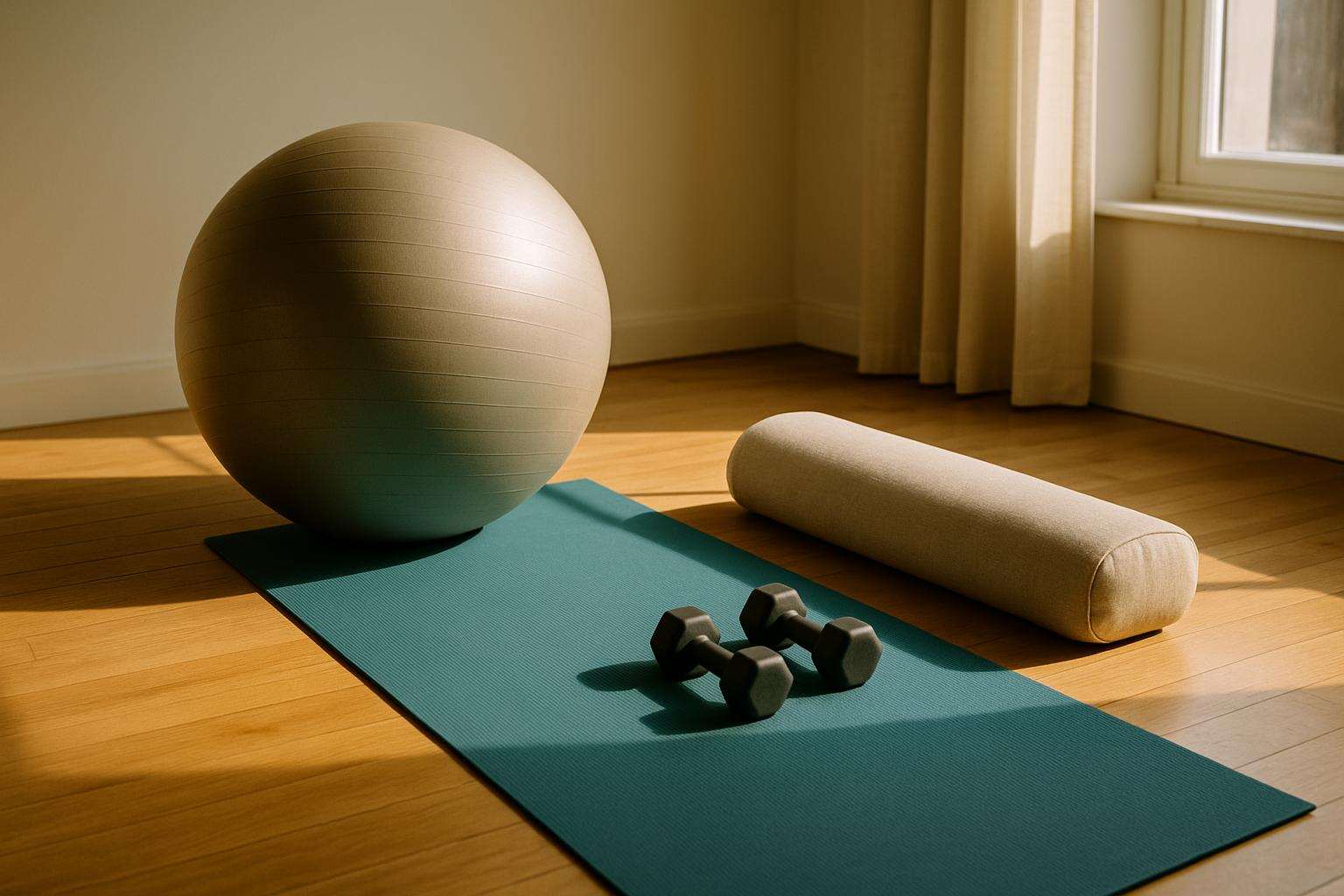
Diastasis recti — separation of the rectus abdominis at the midline — affects roughly 33% of pregnant women by week 21 and up to 60% by six weeks postpartum. No exercise can fully prevent it, but training the deep inner-core "canister" and avoiding high-intra-abdominal-pressure movements measurably reduces its severity and functional impact.
The first time a client showed me the ridge running down the center of her belly during a crunch, she thought it was normal — just her muscles "popping out" with effort. It wasn't. It was coning: a visible sign that her linea alba, the connective tissue seam connecting her two columns of rectus abdominis muscle, was under more pressure than it could contain. She was 22 weeks pregnant. I see this pattern constantly in my pelvic-floor practice — not because women are doing anything wrong on purpose, but because the information most of them received about core training in pregnancy was written for non-pregnant bodies.
This guide explains what diastasis recti actually is, who is most at risk, what the research says about prevention, and how to build a core program in pregnancy that works with your changing anatomy rather than against it.
What exactly is diastasis recti, and why does pregnancy cause it?
Diastasis recti abdominis (DRA) is the lateral separation of the two columns of rectus abdominis — your "six-pack" muscles — at the linea alba, the fibrous band of connective tissue running vertically down the center of the abdomen. The linea alba is not a muscle. It is a tendinous confluence of collagen fibers that transfers force between the left and right sides of the core. When it is stretched beyond its functional range, it becomes thinner, wider, and less stiff — reducing its ability to transmit load efficiently across the midline.
During pregnancy, a growing uterus physically pushes the rectus abdominis columns outward. Simultaneously, the hormone relaxin softens collagen throughout the body — a necessary adaptation for ligament flexibility at birth, but one that also affects the linea alba. The result is a mechanical inevitability: the connective tissue at your midline will stretch. The question is by how much, and whether its functional stiffness is preserved.
A prospective cohort study tracking primiparous women from early pregnancy to 12 months postpartum found DRA prevalence rising from approximately 33% at week 21 to nearly 60% at six weeks postpartum. By 12 months, around 30–33% of women still had a clinically significant separation — defined as an inter-recti distance of 2.2 cm or greater at the level of the navel.
Risk factors beyond the universal hormonal stretch include: higher parity (more previous pregnancies); multiple gestation (twins or more exert greater outward force); advanced maternal age; and higher pre-pregnancy BMI. Women with any of these factors should discuss early pelvic-floor physiotherapy with their provider — not as a reaction to symptoms, but as a preventive investment.
DRA is often described as a cosmetic issue — the so-called "mummy tummy" that won't flatten after delivery. That framing understates the functional stakes. Research published in PubMed Central in 2025 documents that clinically significant linea alba separation correlates with increased risk of abdominal hernia, reduced postural control, lumbar instability, pelvic organ prolapse, and urinary incontinence. These are not inevitable outcomes — but they are real consequences of inadequately addressed separation, and they underscore why exercise strategy matters.
Which exercises favor your linea alba — and which ones stress it?
The single most important concept in prenatal core training is intra-abdominal pressure (IAP). Every time you exert physical effort — lifting, pushing, pulling, coughing, sneezing — pressure inside the abdominal cavity rises. In a non-pregnant body, a well-trained core manages that pressure through coordinated contraction. In a pregnant body with a progressively stretching linea alba, unmanaged IAP spikes outward at the midline, widening the separation over time.
Movements that generate the highest IAP spikes — and therefore deserve the most caution — include:
- Crunches and sit-ups: Full spinal flexion under load or gravity generates a forward-and-outward pressure vector directly at the linea alba. These are generally discouraged from the second trimester onward and in early postpartum DRA rehabilitation.
- Heavy lifting with a Valsalva breath-hold: Holding your breath while bracing generates a sharp IAP spike. Learning to exhale on exertion — even under load — dramatically reduces the peak pressure your midline must absorb.
- Full plank variations with visible coning or doming: Planks are not inherently harmful, but if you see a ridge or tent forming at your midline during a plank, that movement is exceeding your linea alba's current capacity. Modify to an elevated plank (hands on a bench), a shorter hold, or eliminate it.
- Leg raises performed supine (on the back): After the first trimester, prolonged supine exercise should be minimized in any case — the growing uterus can compress the inferior vena cava, reducing venous return and fetal perfusion. But double-leg raises also generate high IAP with the lever arm of two full legs, making them doubly problematic for the linea alba.
- The Pilates "hundred" at full intensity, V-sits, and similar exercises that require sustained abdominal compression and breath-holding.
It is worth noting what the research says about the floor of the evidence here. A 2023 meta-analysis of 16 RCTs enrolling 698 postnatally affected women found that conventional abdominal exercises reduced inter-recti distance by only 0.4 cm on average compared with usual care — a reduction below the 2.2 cm diagnostic threshold for clinical DRA. This doesn't mean exercise is futile; it means conventional exercises are not the right tool for this job.
What is the deep-core canister approach, and how do you train it?
The evidence-based alternative to crunch-based core training is the inner core canister model: a system of four coordinated structures that manage IAP without spiking it.
| Structure | Position in the Canister | Role in IAP Management |
|---|---|---|
| Diaphragm | Top (ceiling) | Descends on inhale, ascends on exhale — drives the breath cycle that coordinates the system |
| Pelvic Floor | Bottom (floor) | Lifts and co-contracts on exhale, providing resistance from below as IAP rises |
| Transversus Abdominis (TVA) | Front and sides (walls) | Deepest abdominal layer; gentle draw-in creates circumferential support without outward pressure |
| Multifidus | Back (posterior wall) | Segmental spinal stabilizer; co-activates with TVA to protect the lumbar spine |
The clinical consensus — supported by a 2025 systematic review and meta-analysis confirming that pelvic floor muscle training reduces urinary incontinence odds by 37% — is that engaging the canister is the preferred approach for both DRA prevention during pregnancy and rehabilitation afterward.
Programs built on this model. The Bloom Method (studiobloom.com), which centers its prenatal programming on the "belly pump" technique — an exhale-driven diaphragmatic breath paired with a gentle TVA draw-in and pelvic floor lift — is one of the most recognized examples. Their prenatal content is trimester-organized: foundational canister work in the first trimester, strength integration in the second, and breath-paced labor preparation in the third. ACOG's Committee Opinion No. 804 broadly endorses both aerobic and resistance training throughout uncomplicated pregnancy — the canister model is how to apply that guidance to the core specifically.
Exercises to favor. Movements that allow you to breathe rhythmically, maintain neutral spine, and avoid visible coning at the midline are generally appropriate. These include: side-lying hip abductions; supported squats and lunges with an exhale on the effort; seated or kneeling resistance band rows; incline push-ups on a bench; stability ball seated pelvic tilts and circles; bird-dog variations (on hands and knees, opposite arm and leg extension with a controlled exhale); and wall sits. The unifying thread is that exertion is paired with the exhale — which naturally triggers TVA and pelvic floor co-contraction and keeps IAP from spiking outward.
What does a realistic prevention strategy look like week by week?
First trimester (weeks 1–13). This is the best time to learn and groove the canister breath before the belly grows. Most conventional exercises are still comfortable and appropriate; the goal is to add canister awareness — especially the exhale-on-exertion habit — to your existing routine. Avoid hot exercise environments (overheating risk is highest here), and begin scaling back full sit-up or heavy crunch work if it is part of your routine.
Second trimester (weeks 14–27). This is when IAP management becomes urgent. The belly is now clearly present, center of gravity shifts, and balance becomes a safety consideration. Begin actively modifying: swap supine exercises to seated, elevated, or side-lying alternatives; introduce stability ball work; watch for coning during any loaded movement and remove or regress the exercise immediately if it appears. If you haven't seen a pelvic-floor physiotherapist yet, now is the ideal time for a baseline assessment.
Third trimester (weeks 28–40). Reduce impact, increase recovery time, and focus on body awareness over volume. Belly support bands — such as the Gabrialla MS-96, a physician-recommended, FDA-listed maternity support belt — can reduce the functional load on the linea alba during daily activity and exercise. The third trimester is also a good time to learn birth-breathing techniques, which double as canister training and labor preparation simultaneously.
Postpartum (six weeks onward). Do not rush return to high-IAP exercise. The first six weeks are a period of connective-tissue healing; even if you feel fine, the linea alba is still remodeling. Begin with diaphragmatic breathing and gentle pelvic floor activation in the first days after delivery, progress to TVA work in weeks two to four, and add functional movements — supported squats, hinges — only after clearing your six-week visit. A formal postpartum pelvic-floor physiotherapy assessment is strongly recommended, particularly if symptoms of incontinence, pelvic pressure, or visible separation persist.
A note on myofascial care. A 2023 systematic review and meta-analysis found that myofascial therapy produced measurable improvements in postpartum rectus abdominis separation, lumbar pain, and pelvic floor dysfunction — suggesting that fascial restriction is a modifiable root cause that exercise alone does not fully address. Pelvic-floor physiotherapists trained in myofascial release can assess and treat this dimension as part of a comprehensive rehabilitation plan.
This article is intended as general educational information for women interested in prenatal core health. It is not a substitute for individualized medical advice. Please discuss your exercise program, any symptoms of separation, and supplement decisions with your obstetric provider and a qualified pelvic-floor physiotherapist.
Frequently asked
What is diastasis recti and how common is it in pregnancy?
Diastasis recti abdominis (DRA) is the separation of the two columns of rectus abdominis muscle at the linea alba — the fibrous midline of your abdomen. As your uterus grows, it stretches the connective tissue of the linea alba outward. Research published in PubMed Central found DRA affects approximately 33% of women by gestational week 21, rising to nearly 60% at six weeks postpartum before partially resolving. By 12 months postpartum, about 30–33% of women still have a clinically significant separation. It is not purely cosmetic: a gap of 2.2 cm or more correlates with increased risk of abdominal hernia, lumbar instability, pelvic organ prolapse, and urinary incontinence. This is general information, not medical advice — talk to your provider if you suspect significant separation.
Can diastasis recti be prevented during pregnancy?
No exercise program can completely prevent DRA — the uterus will stretch the linea alba regardless. What evidence supports is reducing the severity of separation and preserving functional core integrity. The key is substituting deep-core training for high-intra-abdominal-pressure movements early, before separation progresses. Avoiding heavy lifting with a Valsalva breath-hold, replacing crunches and sit-ups with transversus abdominis (TVA) engagement, and learning diaphragmatic breathing patterns all reduce the outward pressure that widens the gap. Risk factors you cannot change include multiple pregnancies, higher parity, advanced maternal age, and pre-pregnancy BMI — women with these factors benefit most from early pelvic-floor physiotherapy referral. A 2025 systematic review and meta-analysis confirmed that pelvic floor muscle training (PFMT) significantly reduces postpartum pelvic floor disorders, including those associated with DRA. Discuss your personal risk profile with your obstetric provider.
What exercises should I avoid if I want to protect against diastasis recti?
The movements most likely to worsen or accelerate linea alba separation are those that create a pronounced intra-abdominal pressure spike or force the midline outward under load. These include: crunches and sit-ups (full spinal flexion under load or gravity); leg lifts performed flat on the back after the first trimester; heavy compound lifts combined with a Valsalva breath-hold (bracing while holding your breath); intense plank variations if coning or doming of the belly is visible at the midline; and V-sit holds or the Pilates "hundred" at full intensity. A 2023 meta-analysis found that conventional abdominal exercises reduced inter-recti distance by only 0.4 cm on average — a change unlikely to be clinically meaningful. If you notice a visible ridge or "tent" along your midline during any movement, stop that exercise and consult your provider or a pelvic-floor physiotherapist.
What is the "inner core canister" and how does it help?
The inner core canister is the clinical term for the four-muscle pressure system that stabilizes the spine and pelvis without spiking intra-abdominal pressure: the diaphragm (top), the pelvic floor (bottom), the transversus abdominis or TVA (front and sides), and the multifidus (back). When these muscles coordinate properly — especially with the breath — they create a 360-degree brace that protects the linea alba. Programs like The Bloom Method are built explicitly on training this canister through their "belly pump" technique: an exhale-driven diaphragmatic breath paired with a gentle TVA draw-in and pelvic floor lift. Research supports this approach as the preferred preventive and rehabilitative strategy for DRA. The goal is not a forceful brace but a coordinated, rhythmic co-contraction timed to exertion. Learning this with a certified prenatal trainer or pelvic-floor physiotherapist will help you apply it correctly.
When should I see a pelvic-floor physiotherapist about diastasis recti?
Ideally, before significant separation occurs — a preventive appointment in the first or early second trimester gives you a baseline and personalizes your movement program before the belly grows substantially. You should also see a pelvic-floor physiotherapist if you notice a visible ridge, "coning," or "doming" at your midline during any exercise or daily movement; if you experience low back pain, pelvic girdle pain, or urinary leakage during activity; or at your six-week postpartum check-up, even if symptoms seem mild. A 2025 meta-analysis confirmed that pelvic floor muscle training reduces the odds of urinary incontinence by 37% — an outcome that substantially depends on correct technique, which most women do not achieve through self-instruction alone. Consumer biofeedback devices like the Elvie Trainer or Perifit can support adherence but are not a substitute for hands-on evaluation. This is general information — seek individualized guidance from a qualified clinician.
Does vitamin D status affect diastasis recti and pelvic floor strength?
Emerging evidence suggests it does — and meaningfully so. Pelvic floor muscles express vitamin D receptors, suggesting a direct physiological relationship, not merely a correlation. A 2023 cross-sectional study of 250 late-third-trimester women found that 84% were vitamin D-deficient (below 20 ng/mL), and deficient women had significantly higher rates of urinary incontinence (42.4% vs. 27.5%) and significantly lower postpartum pelvic floor muscle strength. This matters for DRA because pelvic floor weakness and linea alba separation frequently co-occur and share rehabilitative strategies. Integrative practitioners typically target a 25-OH-D level of 40–60 ng/mL through safe sun exposure, dietary sources, and supplementation. Have your levels checked and discuss supplementation needs with your prenatal provider. This is educational information — do not adjust supplements without medical guidance.