Fitness & Wellbeing
Managing Third-Trimester Swelling: What Helps and What's a Red Flag
Your blood and fluid volume rises about 50% during pregnancy—here's how to ease the puffiness in your ankles and feet, and which symptoms mean you should call your provider right away.
Clinically reviewed · June 2026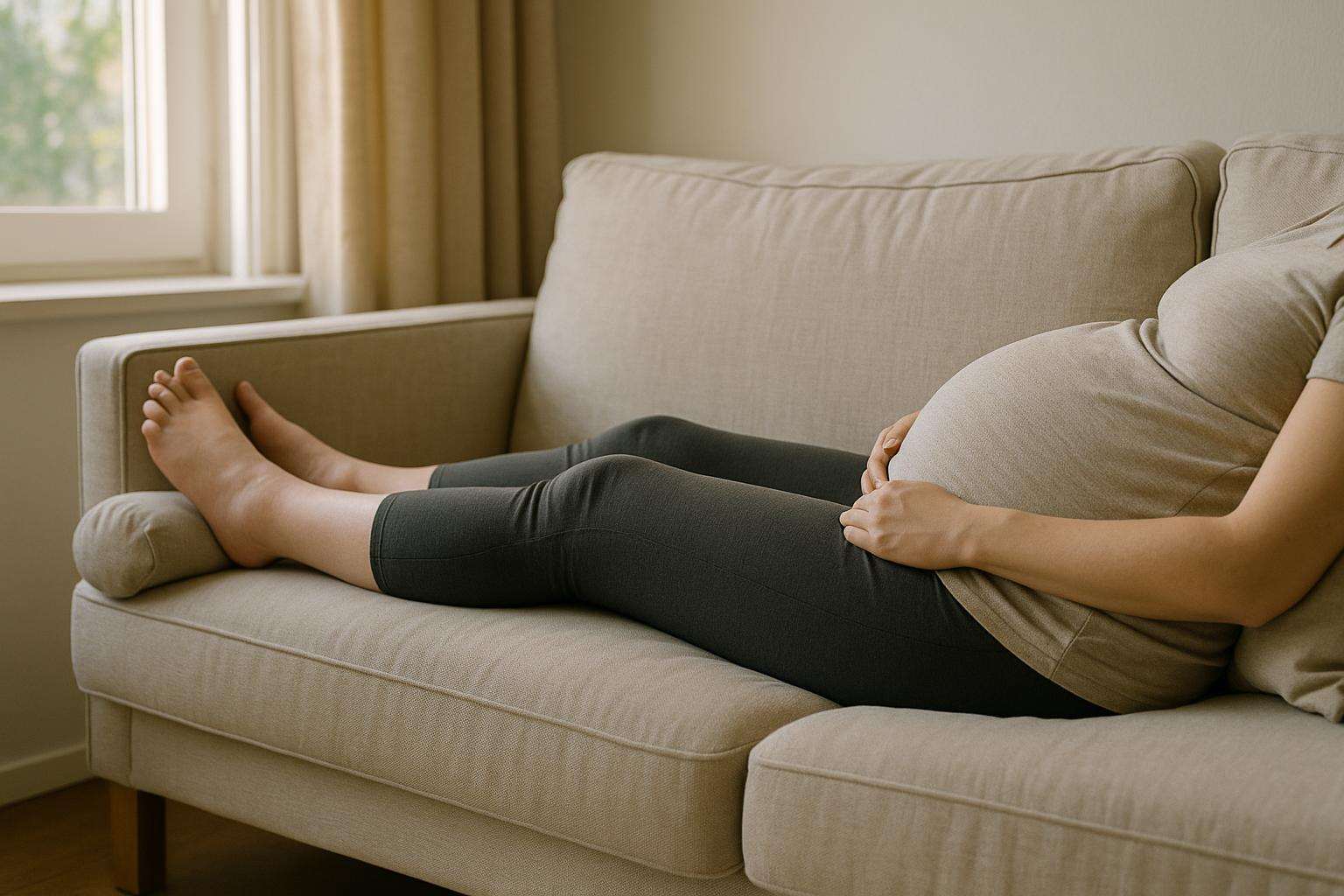
Third-trimester swelling is driven by a 50% rise in blood and fluid volume plus uterine pressure on pelvic veins. Left-side sleeping with legs elevated, graduated compression stockings, walking in a pool, adequate hydration, and a potassium-rich diet provide meaningful relief. Sudden, asymmetric, or face/hand swelling — especially with headache or visual changes — needs immediate evaluation for preeclampsia.
By the third trimester, most pregnant women have made peace with their changing bodies — but swollen ankles and puffy feet can still feel alarming, uncomfortable, and relentless. The good news is that, in the overwhelming majority of cases, lower-extremity edema is a predictable, physiologically normal response to pregnancy. Understanding why it happens makes it considerably easier to address it purposefully — and to recognize the rarer moments when swelling is telling you something important about your health.
This article provides general educational information about third-trimester edema. It is not a substitute for medical advice. Talk to your midwife or obstetrician about any swelling that concerns you, comes on suddenly, or is accompanied by other symptoms.
Why Does Pregnancy Cause So Much Swelling in the Third Trimester?
The root cause is a remarkable circulatory transformation. During pregnancy, total blood and fluid volume increases by approximately 50% above pre-pregnancy levels — a necessary change that supports fetal growth, cushions the placenta, and prepares the body for the fluid losses of labor and delivery. This extra volume has to live somewhere, and some of it naturally moves into the interstitial spaces of your tissues, especially in the lower body where gravity and venous pressure conspire against it.
Elevated progesterone levels cause the walls of the veins to relax and become more permeable, allowing fluid to leak into surrounding tissue more readily. At the same time, the growing uterus exerts direct mechanical pressure on the large veins returning blood from your legs to your heart — the iliac veins and the inferior vena cava. That pressure slows venous return, raises pressure in the leg veins, and causes fluid to pool in the ankles and feet, particularly by evening after a day on your feet.
The result is dependent edema — pitting swelling that accumulates with gravity and improves overnight when you lie flat. If you press a finger into your swollen shin and release it to find a visible dent (a pit) that fills in slowly, that is classic pitting edema. It is unpleasant but, in the absence of other symptoms, physiologically benign.
What Actually Helps? Relief Strategies That Work
The good news is that several practical interventions have genuine mechanistic rationale and good clinical support. Here are the ones that matter most:
Left-Side Sleeping With Leg Elevation
After 28 weeks, ACOG and Mayo Clinic both advise sleeping on the left side, primarily to prevent the gravid uterus from compressing the inferior vena cava (the large vessel returning blood from the lower body to the heart). Left-lateral sleep maximizes venous return, reduces overnight blood pressure elevation, and has been associated in observational studies with reduced stillbirth risk in the third trimester.
Elevating your feet slightly above heart level — using a pillow wedge under your ankles or a full-body pregnancy pillow — adds gravity-assisted drainage of the fluid that has pooled in your lower limbs through the day. Placing a pillow between your knees also keeps your hips and sacroiliac joints in a neutral, parallel position, reducing the hip and pelvic girdle discomfort that often accompanies third-trimester nights. Purpose-built pillows like the Leachco Snoogle (a C-shaped full-body pillow originally designed by a registered nurse) or the Boppy Full Body Side Sleeper are specifically designed to maintain this position through the night without requiring you to prop three separate pillows.
Graduated Compression Stockings
Compression stockings work by applying graduated external pressure — greatest at the ankle, diminishing toward the thigh — that mechanically counteracts the hydrostatic pressure causing fluid to leak from the capillaries into the surrounding tissue. Put them on before your feet touch the floor in the morning, before gravity begins pulling fluid downward. Medical-grade graduated compression (15–20 mmHg for mild edema; 20–30 mmHg for more significant swelling) is more effective than standard support hose. Avoid socks or leggings with tight elastic bands around the calf or ankle, which can create a tourniquet effect and worsen pooling below the band.
Walking in Water
Standing or walking in a pool is one of the most effective — and most overlooked — remedies for pregnancy edema. Hydrostatic water pressure surrounds the entire lower body simultaneously, applying gentle but consistent compression across the full surface area of both legs at once. This squeezes interstitial fluid back into the venous and lymphatic circulation, producing a measurable reduction in ankle circumference within 20–30 minutes. Water walking or a gentle prenatal aquatics class also provides safe low-impact exercise that is ACOG-supported throughout the third trimester.
Hydration and Diet
Increasing your water intake — targeting roughly 8–10 cups daily — sounds counterproductive for swelling but is mechanistically sound. Mild dehydration signals the kidneys to retain fluid, worsening edema. Adequate hydration supports normal renal excretion and can paradoxically help the body release retained fluid.
The dietary dimension of edema management revolves around the sodium-potassium balance. Sodium draws water into the tissues; potassium helps the kidneys excrete sodium and supports vascular tone. A whole-foods diet rich in potassium — sweet potatoes, leafy greens, avocado, bananas, lentils — supports this balance without requiring you to calculate electrolytes. Moderating processed and packaged foods (which carry the bulk of dietary sodium for most Americans) makes a practical difference.
Adequate dietary protein also matters more than many women realize. Low plasma protein — which can result from insufficient protein intake — reduces oncotic pressure, the osmotic force that keeps fluid inside the blood vessels rather than leaking into the tissues. Protein-rich whole foods (eggs, legumes, sustainably sourced fatty fish) are a practical priority in the third trimester for more reasons than just edema.
The highest-yield interventions — left-side sleeping with leg elevation, and graduated compression stockings worn from the moment you wake — work by using gravity and mechanical pressure, respectively. Add water walking and a potassium-rich diet for a meaningful layered approach. These measures will not eliminate all swelling, but most women find them substantially helpful within a few days of consistent use.
Can Supplements Help With Edema?
Magnesium is the supplement most commonly discussed in the context of third-trimester swelling and the leg cramps that often accompany it. Magnesium is an electrolyte involved in fluid balance, nerve signaling, and muscle relaxation. Many pregnant women do not meet the 350–360 mg daily adequate intake through food alone, and functional practitioners commonly recommend magnesium glycinate (200–350 mg at bedtime) both for leg cramp relief and for its broader role in smooth muscle and vascular tone.
It is worth being honest about what the evidence shows. A meta-analysis of four randomized controlled trials on magnesium supplementation for pregnancy leg cramps, published in the Journal of Pediatric Neurosciences, found no statistically significant reduction in cramp frequency overall. Some individual trials showed benefit. The evidence for magnesium specifically reducing fluid retention is observational and indirect. That said, magnesium glycinate is well-tolerated, is considered safe in pregnancy at standard doses, addresses a genuinely common deficiency, and its benefits beyond cramping — including sleep support and blood pressure modulation — are well-grounded. Discuss any supplementation with your obstetric provider before beginning.
What Swelling Is a Red Flag?
This is the most important section of this article. The vast majority of third-trimester edema is bilateral (both legs), gradual in onset, worst at the end of the day, and improves overnight. The following patterns are different — and each warrants a call to your provider or, in severe cases, immediate evaluation:
- Sudden swelling that comes on rapidly rather than accumulating through hours or days
- Asymmetric swelling — one leg markedly more swollen than the other — which can indicate deep vein thrombosis (DVT)
- Swelling in the hands or face (not just the lower limbs)
- Swelling accompanied by severe or persistent headache
- Visual changes: blurring, spots, sensitivity to light
- Pain or tenderness in the upper right abdomen (under the right ribs) — a sign of liver involvement in severe preeclampsia
- Rapid weight gain (more than approximately 2–3 lbs in a week) in the context of any of the above
These symptoms — individually or in combination — are warning signs of preeclampsia, a hypertensive disorder of pregnancy that affects 5–8% of pregnancies and requires prompt clinical evaluation. Per Mayo Clinic, sudden or asymmetric swelling alongside any of these features should never be waited on. Call your provider or go directly to labor and delivery triage without hesitation. Preeclampsia can progress quickly, and early recognition is the single most important protective factor.
It bears repeating: if you are uncertain, call. Your provider would always rather take a reassuring call than hear that you waited on a symptom that mattered.
Frequently asked
Is swelling in the third trimester always normal?
Mild, bilateral swelling (affecting both legs and feet equally) is considered a normal physiological response to pregnancy. During pregnancy, total blood and fluid volume increases by approximately 50%, and the growing uterus places pressure on the pelvic veins, slowing blood return from the lower extremities. This produces the dependent edema most women notice in their ankles and feet, particularly after standing for extended periods or in warm weather.
However, not all third-trimester swelling is benign. Sudden swelling, swelling that comes on rapidly rather than gradually, or swelling that is asymmetric — worse in one leg than the other — warrants a call to your provider, as it can indicate deep vein thrombosis (DVT) or be an early sign of preeclampsia. Always report swelling that is accompanied by headache, visual changes, or pain in the upper right abdomen. See the Mayo Clinic's guidance on pregnancy swelling for a useful overview. This article is general information — talk to your provider about any swelling that concerns you.
What is the fastest way to reduce pregnancy swelling in my feet and ankles?
The most effective near-term relief comes from a combination of position, compression, and movement. Elevating your legs above heart level — lying on your left side with your feet propped on a pillow — uses gravity and improves venous return from the lower limbs. Wearing graduated compression stockings (put them on before you get out of bed, before fluid pools) applies consistent external pressure that counteracts the venous pooling driving edema.
Standing or walking in a pool is surprisingly effective: hydrostatic pressure from the surrounding water squeezes fluid back into circulation, producing noticeable ankle-size reduction within 20–30 minutes. Avoiding prolonged standing or sitting in the same position also helps. Flo Health's evidence-based swelling guide reviews these strategies in detail. Avoid tight elastic-banded socks or clothing around the calf, which can worsen local venous compression. None of these replace a conversation with your provider if swelling appears suddenly or feels extreme.
Does drinking more water really help with pregnancy swelling?
Yes — and it sounds counterintuitive, but it works. When you are mildly dehydrated, your body interprets low circulating fluid volume as a signal to retain water, which can worsen edema. Adequate hydration — roughly 8–10 cups (64–80 oz) of water daily, more in heat or with activity — signals to the kidneys that fluid is plentiful, which supports normal excretion and can help reduce retained fluid in the tissues.
Alongside hydration, moderate sodium awareness helps: processed and packaged foods are often very high in sodium, and reducing them — without eliminating all salt, which is also needed in pregnancy — can lower the osmotic pressure driving fluid into the tissues. A diet rich in potassium (sweet potatoes, avocado, leafy greens, bananas) supports the kidney's ability to excrete excess sodium. The Prenatal Nutritionist's food guide offers practical meal ideas for this approach. Consult your provider before making major dietary changes in pregnancy.
Can magnesium help with third-trimester swelling and leg cramps?
Magnesium is an electrolyte involved in fluid balance, muscle relaxation, and nerve signaling — and many pregnant women do not meet their daily needs through diet alone. Functional practitioners commonly recommend magnesium glycinate (typically 200–350 mg at bedtime) for the leg cramps and sleep disruption that peak in the third trimester, and some women also notice a modest improvement in fluid retention.
The clinical trial evidence specifically for magnesium reducing cramp frequency is mixed: a meta-analysis of four randomized controlled trials found no statistically significant reduction in leg cramp frequency overall, though some individual trials showed benefit. For swelling specifically, magnesium's role is indirect — supporting fluid balance and vascular tone — rather than a direct diuretic effect. A meta-analysis published in the Journal of Pediatric Neurosciences summarizes the trial evidence on magnesium for pregnancy leg cramps. Always discuss supplementation with your obstetric provider before starting.
What swelling symptoms mean I should call my provider immediately?
Most pregnancy edema is bilateral, gradual, and worst at the end of the day. The following patterns require prompt contact with your provider or labor and delivery triage:
- Sudden, rapid swelling — notably in the hands or face — appearing quickly rather than accumulating through the day
- Asymmetric swelling — one leg significantly more swollen than the other, which can signal deep vein thrombosis
- Swelling accompanied by severe or persistent headache
- Visual disturbances: blurring, spots, or light sensitivity
- Pain or tenderness in the upper right abdomen (under the ribs on the right side)
- Sudden significant weight gain (more than about 2–3 lbs in a single week) alongside other symptoms
These symptoms together — or even individually — can be signs of preeclampsia, a serious hypertensive disorder of pregnancy that requires immediate evaluation. Per Mayo Clinic, asymmetric or sudden swelling with any of these accompanying symptoms should never be waited on. This is general information, not medical advice — always call your provider when in doubt.
Does sleep position affect pregnancy swelling?
Yes — significantly. After 28 weeks, sleeping on your back allows the weight of the gravid uterus to compress the inferior vena cava, the large vein returning blood from your lower body to your heart. This reduces cardiac output and slows venous return from the legs, worsening dependent edema and potentially reducing uteroplacental blood flow. ACOG and the Royal College of Obstetricians and Gynaecologists both advise avoiding supine sleep after 28 weeks.
Left-lateral sleeping (lying on your left side) maximizes venous return and is the preferred position. Adding a pillow under your knees, or using a full-body pregnancy pillow like the Leachco Snoogle or Boppy Full Body Side Sleeper, keeps your hips in neutral alignment and maintains the side-lying position through the night. A wedge pillow under the feet to elevate the legs slightly above heart level provides additional drainage of fluid from the lower limbs and is a simple, inexpensive addition to your sleep setup.