Fitness & Wellbeing
Best Sleep Positions During Pregnancy (and What to Avoid)
After 28 weeks, left-side sleeping is the gold standard. Here is the vena cava science, the pillow setups that actually work, and the real story on back-sleeping.
Clinically reviewed · June 2026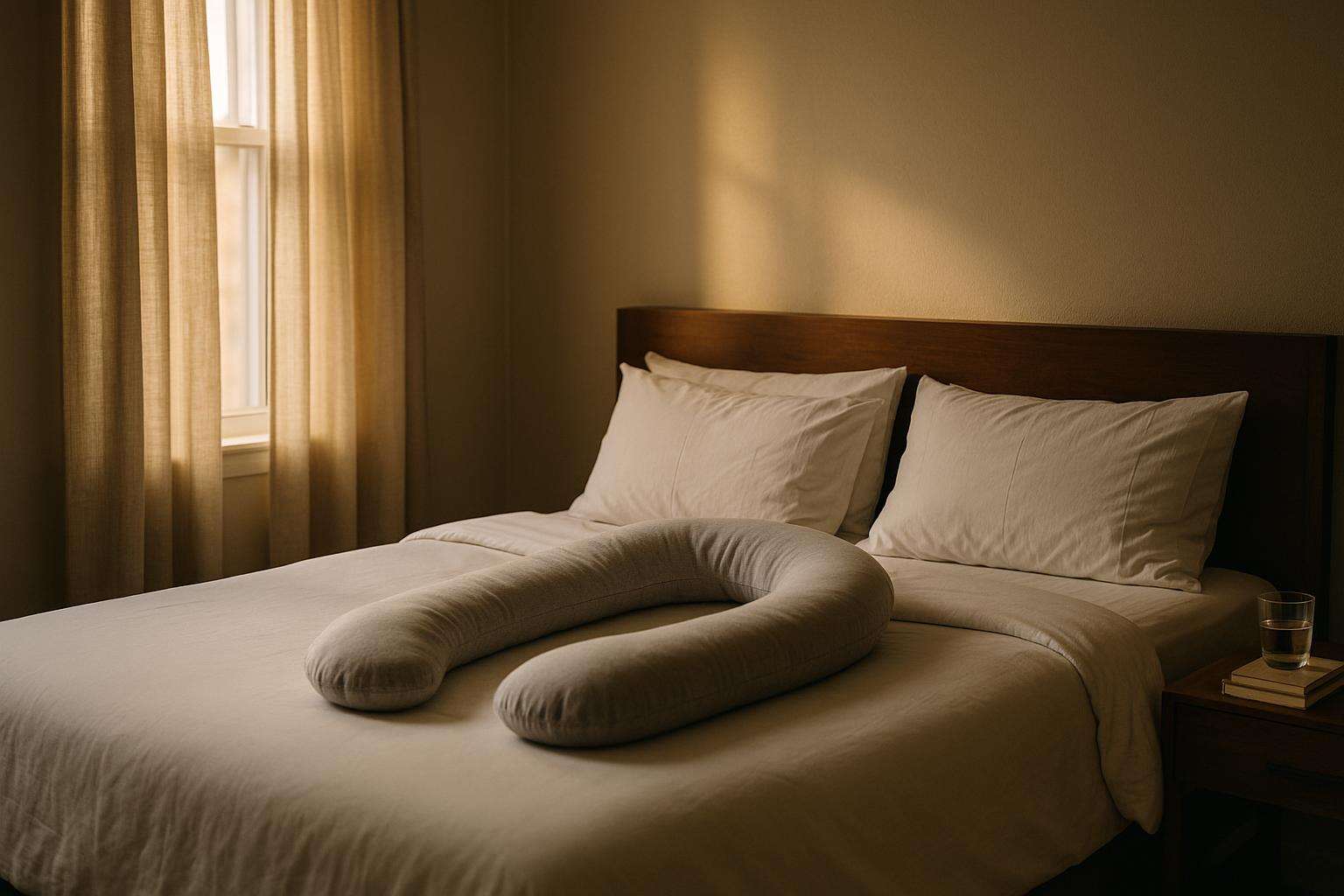
After 28 weeks, sleep on your left side with a pillow between your knees. This position keeps the weight of the uterus off the inferior vena cava — the vein that returns blood to your heart — maximizing blood flow to you and your baby. Back-sleeping before 28 weeks is generally fine; brief accidental back-sleeping later is not an emergency.
Sleep becomes elusive in the third trimester for many reasons — a growing belly, frequent bathroom trips, restless legs, heartburn — but position matters in a way it simply did not in the first trimester. As a pelvic-floor physical therapist who works with pregnant women every week, I want to give you the actual physiology, not just a list of rules, so you understand why your position matters and can troubleshoot when the recommended setup is not working for your body.
This article is general information, not medical advice. Talk with your obstetric provider or midwife about any sleep concerns specific to your pregnancy.
Why does sleep position change after 28 weeks — and what is the vena cava?
The inferior vena cava is the large vein that runs along the right side of your spine, collecting deoxygenated blood from your legs, pelvis, and lower abdomen and delivering it back to the right side of the heart. In the third trimester, the uterus — which now weighs several pounds and sits high in the abdomen — can press directly on this vessel when you lie flat on your back.
When that compression occurs, venous return to the heart drops, cardiac output falls, and blood pressure to the uterus and placenta decreases. You may feel this as lightheadedness, shortness of breath, or sudden nausea when rolling onto your back. Your body is alerting you before harm occurs, which is why most women naturally shift out of the supine position.
Both ACOG and the National Guideline Alliance for the Royal College of Obstetricians and Gynaecologists advise pregnant women to avoid supine sleeping after 28 weeks. Left-lateral decubitus sleeping — lying on the left side — is preferred because the inferior vena cava sits to the right of the spine; the uterus falls away from it when you lie on your left, restoring full venous return.
Some observational studies have also linked consistent left-side sleeping in the third trimester with reduced risk of stillbirth, though causality is not firmly established, and this remains an area of active research. What is clear is the mechanical rationale: left-side positioning optimizes cardiac output and uteroplacental perfusion during a period when both are under real physiological stress.
Before 28 weeks, the uterus is generally not large enough to cause meaningful vena cava compression, so back-sleeping is not a concern in the first trimester and most of the second. Some women notice mild symptoms — lightheadedness, nausea — when flat on their backs even earlier; that sensation is your cue to shift, not a sign of danger.
What is the right pillow setup for left-side sleeping?
Getting the positioning right matters as much as choosing the position itself. Left-side sleeping without adequate support frequently leads to hip and sacroiliac pain — two of the most common complaints I hear from third-trimester patients. The culprit is usually the top leg rolling forward, creating a rotational stress on the pelvis that is already vulnerable from relaxin-induced ligament laxity.
Here is the setup that resolves it for most women:
- Between the knees and ankles: A firm pillow — or the lower section of a body pillow — keeps the knees and ankles stacked in parallel. This eliminates the forward roll of the pelvis and dramatically reduces sacroiliac and hip joint loading.
- Under the belly: A small wedge pillow or folded blanket tucked under the abdominal bump prevents the round ligaments from being stretched downward by the weight of the uterus. Many women find this alone eliminates the aching sensation in the lower abdomen at night.
- Behind the back: A pillow or the back arc of a C-shaped body pillow acts as a physical barrier against rolling to the supine position during sleep.
- Leg elevation: Elevating both legs slightly — even a folded pillow under the ankles — reduces dependent edema and venous pressure in the lower extremities. Mayo Clinic includes this positioning alongside compression stockings and hydration as a first-line management strategy for pregnancy-related swelling.
All of these functions — back support, belly support, knee pillow, and head elevation — can be consolidated into a single C-shaped or U-shaped body pillow if you prefer not to manage multiple separate pillows. The trade-off is bed space.
Left side down. Pillow between knees to stack the hips. Wedge under the belly to support the weight. A pillow behind the back to prevent rolling supine. Ankles slightly elevated if swelling is a concern. Adjust firmness and size until you wake without hip or low-back pain.
Which pregnancy pillow shape is right for you?
Three designs dominate the market, each with distinct trade-offs:
C-shaped pillows (e.g., Leachco Snoogle). The Snoogle was originally designed by a registered nurse and remains the best-selling body pillow on Amazon. At 60 inches long, it supports the head, neck, back, belly, and hips simultaneously. Reviewers consistently cite its firm polyester fill as a differentiator — it provides structural support, not just cushioning. The removable, machine-washable cover is available in four fabric grades. The main drawbacks are its footprint in beds smaller than queen-size and the challenge of re-inserting the pillow into its form-fitted cover after washing. Available at Amazon, Target, and Nordstrom; the Signature variant is Target-exclusive.
U-shaped pillows (e.g., PharMeDoc U-Shape). These wrap fully around the body, providing simultaneous front and back support without repositioning when you turn over — an advantage for women who shift sides frequently. BabyGearLab assigned the PharMeDoc U-shape a high Versatility score but flagged a slippery cover surface and heat retention from the polyester fill as drawbacks. The U-shape lists for approximately $45 at major retailers.
Wedge pillows and targeted inserts. For women who do not want to replace their entire pillow arrangement, a small wedge tucked under the belly is often sufficient to address the round-ligament pulling that disrupts sleep in the second trimester. Wedges are inexpensive, easy to travel with, and work alongside a regular bed pillow.
A note on materials: if you are shopping in the third trimester, look for pillows with OEKO-TEX Standard 100 or GREENGUARD Gold certification. Both programs test against restricted-substances lists that include phthalates and certain flame retardants — compounds that functional medicine practitioners flag as worth minimizing during pregnancy.
What about back-sleeping — is it ever okay in the third trimester?
This is the question I am asked most often, and the answer is more nuanced than the guidelines sometimes suggest. If you wake up on your back, you are not in danger. Your body will alert you — through discomfort, lightheadedness, or shortness of breath — long before meaningful harm occurs. The studies associating back-sleeping with adverse outcomes are observational and reflect prolonged, uninterrupted supine positioning, not a brief unintentional shift during the night.
The evidence is strong enough that deliberate back-sleeping after 28 weeks is not recommended, but the guidance from ACOG and the Royal College of Obstetricians and Gynaecologists frames this as a preference for the left-lateral position, not an emergency prohibition. If you set up a body pillow as a physical barrier behind you, you will roll against it rather than fully supine, which significantly reduces how far and how long you end up on your back.
The practical strategy: establish the left-side setup, use a pillow barrier, and do not catastrophize when you find yourself repositioned in the morning. Anxiety about sleep position can itself disrupt the sleep quality that matters for fetal well-being and your own recovery — that trade-off is worth naming.
How does sleep position affect swelling in the legs and ankles?
Pregnancy increases total blood and fluid volume by approximately 50%, and the growing uterus compresses pelvic veins, promoting dependent edema — the ankle and foot swelling that peaks in the third trimester. Sleeping on your left side with your legs slightly elevated works on both mechanisms: the left-lateral position reduces uterine compression of pelvic veins, and leg elevation uses gravity to return pooled fluid back toward the central circulation.
The overnight period is when the body does much of its fluid redistribution. Waking up with significantly less ankle swelling than you had at the end of the day is a sign the positioning and horizontal posture are working as they should. If swelling is persistent in the morning, or if it is sudden, asymmetric, or accompanied by headache, visual disturbances, or right upper quadrant pain, contact your provider immediately — these are warning signs of preeclampsia that warrant same-day evaluation.
Supporting your nutrition can also help: a whole-foods diet high in potassium (sweet potatoes, avocado, leafy greens, bananas) supports the kidneys in excreting excess sodium, and adequate protein intake maintains plasma oncotic pressure that keeps fluid in the right compartments. Discuss any supplementation — including magnesium glycinate, which some practitioners recommend for leg cramps and sleep disruption in the third trimester — with your obstetric provider before beginning.
Frequently asked
Is it safe to sleep on my back during the first and second trimester?
For most of the first trimester and the early second trimester, sleeping on your back is generally fine. The concern about back-sleeping applies primarily after 28 weeks, when the uterus is large enough to press meaningfully on the inferior vena cava — the large vein that carries blood from your lower body back to your heart. Before that point, back-sleeping is unlikely to cause significant compression. That said, some women notice lightheadedness or nausea when flat on their backs even in the second trimester; that is your body's signal to shift positions. Mayo Clinic recommends left-side sleeping as the ideal position from the second trimester onward, while acknowledging that occasional back-sleeping earlier is not harmful. If you are ever uncertain about symptoms while lying down, speak with your provider.
Why is sleeping on the left side better than the right side during pregnancy?
The left lateral position is preferred because the inferior vena cava runs slightly to the right of the spine. When you lie on your left side, the weight of the uterus falls away from that vessel, allowing unobstructed venous return to the heart and, in turn, maximizing oxygenated blood flow to the placenta. Both ACOG and the National Guideline Alliance for the Royal College of Obstetricians and Gynaecologists advise avoiding the supine (flat on back) position after 28 weeks for precisely this reason. Right-side sleeping is not dangerous — it is simply somewhat less optimal. If you wake up on your right side, calmly roll to the left. Some observational studies have linked consistent left-side sleeping in the third trimester with reduced stillbirth risk, though causality has not been firmly established. Prioritize comfort alongside position, as disrupted sleep has its own costs in late pregnancy.
What is the best pregnancy pillow for side sleeping?
Three designs dominate the pregnancy pillow category. The Leachco Snoogle — a C-shaped pillow originally designed by a registered nurse — is 60 inches long and supports the head, neck, back, belly, and hips simultaneously with a firmer polyester fill. It holds the top position in Amazon's body pillow category and is available at Target, Amazon, and Nordstrom. The PharMeDoc U-shape wraps fully around the body for simultaneous front-and-back support; BabyGearLab gave it high versatility scores but flagged a slippery cover and heat retention as drawbacks. The Boppy Total Body earned the top ease-of-cleaning score — both pillow and cover are machine-washable — but received lower comfort scores due to uneven fill. For most women, the Snoogle's firm, targeted support makes it the starting recommendation; for those who want to feel wrapped on all sides, the U-shaped PharMeDoc is worth considering.
How should I position pillows to reduce hip and back pain while sleeping on my side?
The key is keeping your hips stacked and parallel so that the pelvis stays neutral rather than twisting forward. Place one pillow between your knees and ankles — this prevents the top leg from rolling forward and eliminates the torsional load on the sacroiliac joints, which are already loosened by the hormone relaxin during pregnancy. A wedge pillow or small folded blanket tucked under your belly provides additional support for the abdominal weight and reduces the pulling sensation on the round ligaments. If you experience hip pain from the mattress itself, a topper (2–3 inches of medium-density memory foam or latex) can distribute pressure more evenly. Elevating both legs slightly — with a firm pillow under the ankles — also reduces dependent edema and venous pressure in the lower legs, per Mayo Clinic guidance on managing third-trimester swelling. As a pelvic-floor physical therapist, I see hip and sacroiliac discomfort as the most common sleep complaint in the third trimester — proper pillow stacking resolves it for the majority of my patients.
What if I wake up on my back in the third trimester — is the baby in danger?
This is one of the most common worries I hear from pregnant women, and the reassurance is genuine: if you roll onto your back during sleep, your body will typically alert you before any harm occurs. Most women wake up feeling lightheaded, short of breath, or uncomfortable — these sensations arise from reduced cardiac output caused by vena cava compression, and they reliably prompt you to shift position. The studies linking back-sleeping to adverse outcomes are observational and do not establish that brief, unintentional back-sleeping causes harm; they identify it as a correlated risk factor in prolonged supine positioning. ACOG and the Royal College of Obstetricians and Gynaecologists both frame their guidance as preferring the left-lateral position, not as an emergency prohibition on back-sleeping. The practical takeaway: set yourself up for left-side sleeping with a body pillow as a physical barrier, but do not lose sleep — literally — over occasional positional shifts. Talk to your provider if you have concerns specific to your pregnancy.
Does sleeping position affect swelling (edema) during pregnancy?
Yes, meaningfully. During pregnancy, total blood and fluid volume increases by approximately 50%, and the growing uterus compresses pelvic veins, promoting fluid pooling in the lower extremities. Sleeping on your left side with your legs slightly elevated reduces venous backpressure and helps the kidneys process excess fluid more efficiently overnight. Mayo Clinic recommends this positioning alongside wearing graduated compression stockings during the day, staying well hydrated (which paradoxically helps the body release retained fluid), and moderate sodium management. A whole-foods diet rich in potassium — sweet potatoes, avocado, leafy greens — supports the kidneys in excreting excess sodium. If swelling is sudden, asymmetric, or accompanied by headache, visual changes, or upper-right abdominal pain, contact your provider immediately, as these may signal preeclampsia.