Fitness & Wellbeing
Pregnancy Workouts by Trimester: A Safe Exercise Plan
A trimester-by-trimester exercise guide built on ACOG's 150-minute target — with the modifications, warning signs, and gear that support a changing body from week 4 through week 40.
Clinically reviewed · June 2026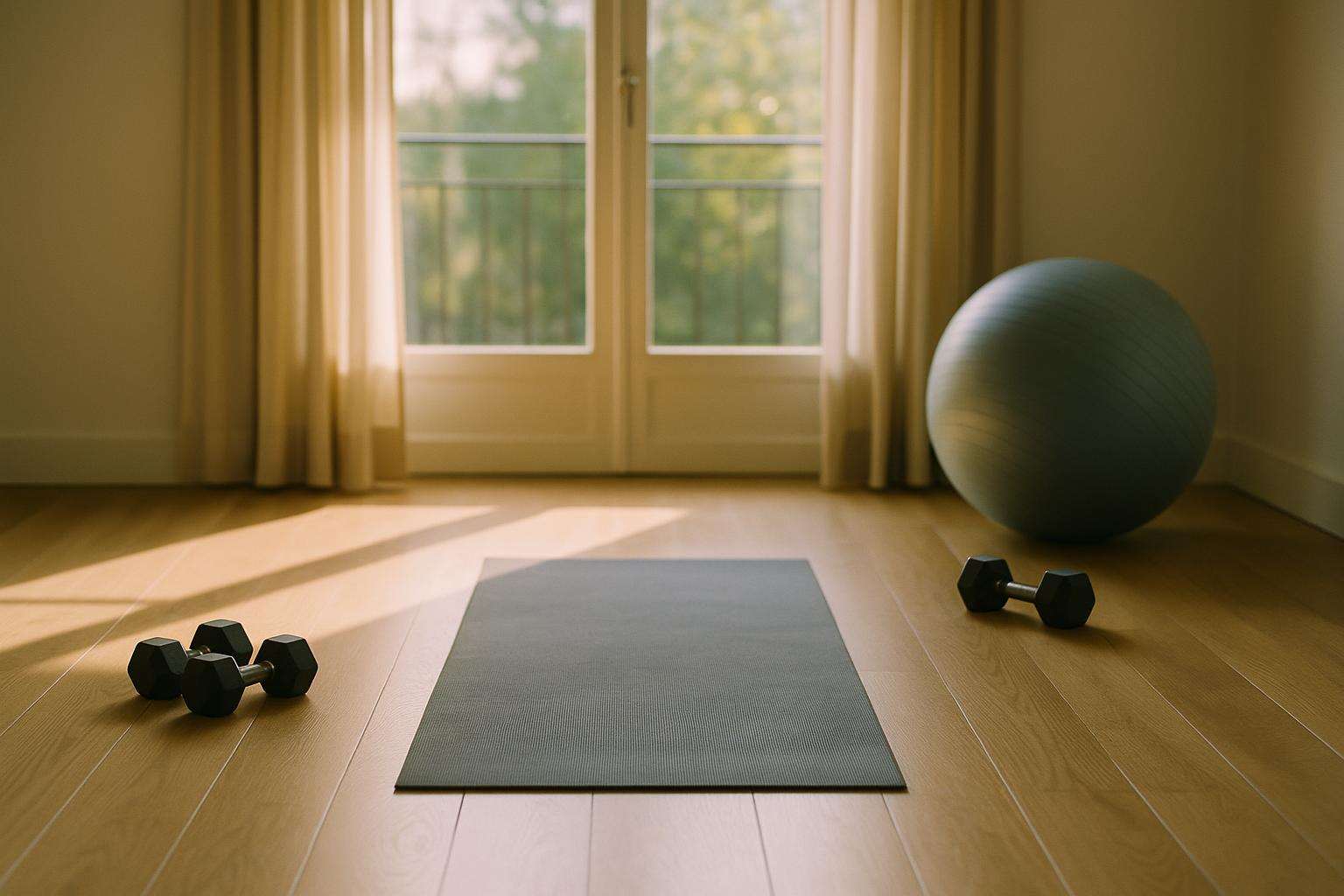
For uncomplicated pregnancies, ACOG recommends 150 minutes of moderate aerobic activity per week across all three trimesters — roughly five 30-minute sessions. The talk test (you can speak but not sing) replaces the outdated 140 bpm heart-rate limit. Exercises change by trimester as your center of gravity, joint laxity, and energy shift, but movement is safe and beneficial throughout.
When I work with prenatal clients in pelvic-floor physical therapy, the question I hear most often is some version of: "Is it really okay for me to keep exercising?" The answer, for the vast majority of women with uncomplicated pregnancies, is an unqualified yes — and the evidence behind that answer is stronger than it has ever been.
ACOG Committee Opinion No. 804, the current governing guideline published in Obstetrics & Gynecology in April 2020, documents a long list of benefits: reduced risk of gestational diabetes, preeclampsia, cesarean delivery, and operative vaginal delivery; improved postpartum recovery; and a protective effect against postpartum depressive disorders. The opinion also explicitly states that bed rest is not effective for preventing preterm birth and should not be routinely recommended — reversing decades of cautious over-restriction.
What follows is a trimester-organized plan grounded in that ACOG guidance, with the modifications and gear that make it practical at each stage. This is general educational information, not a substitute for a conversation with your OB, midwife, or pelvic-floor physical therapist — especially if you have any pregnancy complications.
What does the ACOG exercise guideline actually say?
The headline number is 150 minutes of moderate-intensity aerobic activity per week, distributable as five 30-minute sessions or shorter bouts of at least 10 minutes. Both aerobic and strength/resistance exercise are encouraged throughout pregnancy. Women who exercised vigorously before pregnancy — including competitive athletes — may continue vigorous-intensity activity with individualized provider guidance.
The outdated 140 bpm heart-rate ceiling has been retired. Research found that more than half of OB physicians still recommend fixed heart-rate limits, most citing 121–160 bpm, despite ACOG's guidance being updated. The endorsed tool instead is the talk test: moderate intensity means you can speak in full sentences but cannot sing. Rating of Perceived Exertion (RPE) scales are equally acceptable.
Exercises to avoid across all trimesters, regardless of how fit you are:
- Contact sports with abdominal trauma risk (soccer, basketball, hockey)
- High fall-risk activities: downhill skiing, off-road cycling, gymnastics, horseback riding
- Scuba diving (risk of fetal decompression injury)
- Exercise above 2,500 meters (8,200 feet) altitude if you do not live at altitude
- Prolonged supine (flat on the back) positions after the first trimester
- Hot yoga or hot Pilates at any trimester (elevated core temperature risk)
| Category | Examples | Guidance |
|---|---|---|
| Absolute contraindications | Hemodynamically significant heart disease, restrictive lung disease, incompetent cervix/cerclage, placenta previa after 26 weeks, ruptured membranes, preeclampsia, severe anemia | Do not exercise; discuss all activity with provider |
| Relative contraindications | Severe obesity, extreme underweight, poorly controlled Type 1 diabetes, hypertension, thyroid disease | Require obstetric evaluation before beginning or continuing |
| Activities to avoid (all trimesters) | Contact sports, high fall-risk activities, scuba diving, altitude >2,500 m, hot yoga/Pilates | Replace with lower-risk alternatives |
| Positions to minimize | Prolonged supine after first trimester, prolonged motionless standing | Use inclined, side-lying, seated, or standing movement alternatives |
How should workouts change trimester by trimester?
The 150-minute weekly target stays constant, but how you hit it — and what you modify — changes meaningfully as the pregnancy progresses.
First trimester (weeks 1–13): foundations and staying cool
For many women, the first trimester is the hardest to exercise through, not because it is medically risky, but because nausea and fatigue are at their peak. Shorter sessions of 10–15 minutes are completely valid and count toward your weekly total. On good days, longer walks, swimming, stationary cycling, or light strength training are all appropriate.
The most clinically important first-trimester consideration is core temperature. Overheating risk is highest in the first trimester because this is when neural-tube development is occurring. Choose breathable athletic wear, exercise in ventilated or air-conditioned spaces, and stay hydrated. Avoid outdoor workouts in heat and humidity. Hot yoga and hot Pilates are contraindicated throughout pregnancy, but this matters most right now.
This trimester is also the right time to begin foundational deep core work: diaphragmatic breathing, pelvic floor activation (Kegels performed correctly — lifting and squeezing, not bearing down), and the transversus abdominis draw-in. Research consistently shows that 30–50% of women perform Kegels incorrectly even after verbal instruction, most commonly by increasing intra-abdominal pressure rather than lifting. If you are uncertain about your technique, a pelvic-floor physical therapist is the most reliable resource — or a program like The Bloom Method, which centers on the 'belly pump' co-contraction throughout its prenatal programming.
Second trimester (weeks 14–27): the most comfortable exercise window
Most women find the second trimester the easiest trimester to train in. Nausea typically eases, energy returns, and the belly is growing but not yet significantly limiting movement. This is the window for building the strength reserves that will support you through the third trimester and postpartum recovery.
A good weekly template for the second trimester (adapted from programs with strong clinical review like Sweat's Pregnancy program) includes:
- Two to three resistance/strength sessions: full body, upper body, and lower body (20–30 minutes each)
- Two to three cardio sessions: walking, swimming, stationary cycling, or prenatal yoga (30 minutes each)
- One to two rest or light recovery days: stretching, stability ball work, gentle mobility
Balance begins shifting in the second trimester as the center of gravity moves forward. Activities with fall risk — skating, hot yoga, anything on uneven terrain — become more hazardous even if they were previously safe. Eliminate prolonged supine positions from your routine now. Side-lying, seated, and standing exercise alternatives cover virtually everything you need.
Diastasis recti — separation of the rectus abdominis at the linea alba — affects approximately 33% of women by gestational week 21. Standard crunches, V-sits, and any exercise that creates visible 'coning' at the midline should be replaced with deep core alternatives that do not generate excessive intra-abdominal pressure.
Third trimester (weeks 28–40): adapting for a changing body
The third trimester is not the time to stop — it is the time to adapt. Reduce impact: swap running for brisk walking or pool walking, which offloads joint pressure substantially. Swimming and water aerobics are particularly comfortable in late pregnancy for this reason. Increase recovery time between strength sessions.
Stability ball work becomes especially valuable now. A 65 cm ball (for women 5'4"–5'10") supports core and pelvic mobility exercises, provides seated relief from spinal compression, and is used during labor itself to encourage fetal descent and manage contractions. Using one during prenatal workouts is practical preparation for the birth room.
Programs with dedicated third-trimester tracks — such as The Bloom Method's BirthPREP classes, which combine muscle fatigue with controlled breathing to build both physical and mental endurance — are worth exploring in weeks 32–40. Women with prior preterm labor or fetal growth restriction should reduce activity in the second and third trimesters per their provider's direction.
ACOG identifies nine clinical signals to cease exercise immediately: (1) vaginal bleeding; (2) regular painful contractions; (3) amniotic fluid leakage; (4) shortness of breath before exertion; (5) dizziness or faintness; (6) headache; (7) chest pain; (8) calf pain or swelling; (9) decreased fetal movement. Stop, rest, and contact your OB or midwife. Do not resume until cleared.
What gear actually makes a difference?
You do not need a gym to exercise safely during pregnancy. The most useful at-home setup, per certified prenatal trainers and physical therapists, is modest:
- Dumbbells (5 lb, 8 lb, and 12 lb). Select a weight allowing 10–15 clean repetitions, not your pre-pregnancy working weight. This set covers the range most pregnant women use across upper and lower body work.
- Resistance bands (light and medium). Loop bands and handled bands provide safe, joint-friendly resistance for glute work, rows, bicep curls, and hip abductions. Mini loop bands around the thighs are particularly effective for hip stability.
- Stability ball (55–75 cm, sized by height). Among the most versatile single pieces of prenatal equipment — pelvic mobility, seated core work, spinal decompression, and labor support.
- Non-toxic yoga mat. A PVC-free mat (natural rubber, cork, or certified TPE) avoids phthalate plasticizers, which are endocrine-disrupting chemicals associated in published research with altered fetal sex-hormone concentrations during first-trimester exposure. Look for OEKO-TEX or GREENGUARD Gold certification.
- Foam roller. Addresses hamstring, IT band, and inner-thigh tightness — common pregnancy complaints — and provides relief for sciatic nerve pain, which affects a significant proportion of women in the second and third trimesters.
Belly support bands are worth mentioning for women experiencing round ligament pain, symphysis pubis dysfunction, or added lumbar load during exercise. The Gabrialla MS-96 ($29.95; physician-recommended since 1996, FDA-listed, HSA/FSA eligible) uses dual-pull elastic side straps for adjustable compression and includes a rear hot/cold pack pocket. The Momcozy BellyEmbrace is FDA-certified and positioned as a budget option specifically designed to reduce abdominal bounce during running. Wear any support band for limited periods — a few hours at a time — to avoid restricting circulation.
Footwear matters more than many women expect. Relaxin-mediated ligament loosening alters foot mechanics throughout pregnancy, and approximately 80% of pregnant women experience lower-extremity edema that may require sizing up by a half to full shoe size. For walking and low-impact cardio: the ASICS Gel-Kayano 32 leads for overpronation control; the Brooks Ghost line is broadly praised in the prenatal running community for combining cushioning with stability; Hoka Bondi 9's wide base enhances balance confidence. Slip-on or easy-entry designs are practical by the third trimester when lacing is uncomfortable.
What nutritional foundations support prenatal exercise?
Exercise capacity during pregnancy is meaningfully influenced by nutritional status — a dimension rarely addressed in standard exercise counseling, but one I discuss with every prenatal client.
Magnesium. A cofactor for over 300 enzymes and essential to neuromuscular function, magnesium is frequently low in pregnancy. A review of 188 prenatal supplements found 66% included magnesium but at a median of only 50 mg — far below the 310–360 mg daily adequate intake. Leg cramps, one of the most common reasons pregnant women scale back exercise, are associated with hypomagnesemia. Magnesium glycinate is the form most integrative practitioners prefer for its bioavailability and gastric tolerance. Discuss any supplementation with your provider and stay within the 350 mg/day tolerable upper intake limit from supplements.
Vitamin D and pelvic floor performance. A 2023 cross-sectional study of 250 pregnant women found that 84% were vitamin D-deficient (<20 ng/mL), and deficient women had significantly higher rates of urinary incontinence and significantly lower postpartum pelvic floor muscle strength. Pelvic floor muscles express vitamin D receptors, suggesting a direct mechanistic relationship — not merely correlation. Standard pelvic floor training cannot fully compensate for a nutritional deficiency in the substrate those muscles need to function. Integrative practitioners typically target a serum 25-OH-D level of 40–60 ng/mL, re-testing each trimester.
These are not replacements for your prenatal supplement or your provider's guidance. They are the nutritional roots of exercise capacity that a functional approach to prenatal fitness addresses alongside sound movement programming.
Frequently asked
Is it safe to exercise every day during pregnancy?
ACOG's guidance supports daily activity in uncomplicated pregnancies. The 150-minute weekly target can be spread across five 30-minute sessions or broken into shorter bouts of at least 10 minutes — so daily movement is not only safe, it's encouraged. That said, rest days matter too. Muscle recovery slows during pregnancy because of increased blood volume, looser ligaments, and higher resting heart rates. Alternating harder cardio or strength days with lighter yoga or walking days gives your body what it needs. If you feel dizzy, unusually fatigued, or notice any of the nine warning signs listed by ACOG (vaginal bleeding, chest pain, amniotic fluid leakage, decreased fetal movement, among others), stop immediately and contact your provider. This is general information, not medical advice — always confirm an exercise plan with your OB or midwife.
What heart rate should I stay under while working out pregnant?
There is no evidence-based fixed heart-rate ceiling for pregnant women. ACOG Committee Opinion No. 804 explicitly retired the older 140 bpm limit because it was not grounded in research. Research published in PubMed Central found that more than half of OB physicians still recommend heart-rate caps — most citing 121–160 bpm — despite this guidance being outdated. Instead, ACOG endorses the talk test: moderate intensity means you can speak full sentences but cannot sing. If you exercised vigorously before pregnancy, you may continue vigorous activity with individualized guidance from your provider. Rating of Perceived Exertion (RPE) scales are also a reliable tool, targeting an RPE of roughly 13–14 (somewhat hard) on the 6–20 Borg scale.
Can I do ab workouts while pregnant?
Yes — with important modifications. Standard crunches, V-sits, and any exercise that creates a visible 'coning' or 'doming' at the midline should be replaced with deep core work targeting the transversus abdominis, pelvic floor, and diaphragm together. This is the 'inner core canister' approach used by programs like The Bloom Method, which centers on the 'belly pump' — a diaphragmatic breath coordinated with a pelvic floor lift and transverse abdominis draw-in. After the first trimester, any exercise requiring you to lie flat on your back for extended periods should also be minimized or eliminated, because the growing uterus can compress the inferior vena cava and reduce blood flow. Side-lying, inclined, seated, and standing core variations are all good alternatives. Diastasis recti — separation of the rectus muscles at the linea alba — affects roughly 33% of women by gestational week 21; avoiding excessive intra-abdominal pressure is the key preventive strategy.
When should I stop exercising during pregnancy?
Stop immediately and contact your provider if you experience any of the nine warning signs identified by ACOG: (1) vaginal bleeding; (2) regular painful contractions; (3) amniotic fluid leakage; (4) shortness of breath before you begin exerting yourself; (5) dizziness or faintness; (6) headache; (7) chest pain; (8) calf pain or swelling (a possible sign of deep vein thrombosis); or (9) decreased fetal movement. You should also scale back or pause if you feel extreme fatigue, muscle weakness, or persistent nausea. Beyond warning signs, women with absolute contraindications — including placenta previa after 26 weeks, ruptured membranes, preeclampsia, hemodynamically significant heart disease, or incompetent cervix/cerclage — should not exercise. Relative contraindications like severe anemia or poorly controlled Type 1 diabetes require evaluation before continuing.
What prenatal workout apps do doctors recommend?
The four most widely reviewed prenatal platforms each have a distinct edge. Expect leads on medical oversight — every workout is reviewed by OB/GYNs and pelvic floor work is approved by a urogynecologist. Sweat (Pregnancy with Kayla Itsines) is a 40-week program structured by gestational week, requiring only dumbbells, a chair, and resistance bands; pricing is approximately $19.99/month or $119.99/year with a 7-day trial. The Bloom Method / Studio Bloom emphasizes pelvic floor and transversus abdominis co-activation across all trimesters, with a trimester-organized library and 1-on-1 coach messaging; cost is $29/month or $240/year. Bodylura (formerly Fit Body App) allows you to select your fitness level, adjusting volume and weights for beginners through advanced exercisers. Both The Bloom Method and Expect accept HSA/FSA payments — a meaningful cost consideration.
What are the best exercises for each trimester?
Broadly: first trimester — walking, swimming, stationary cycling, and foundational deep core work (belly pumps, diaphragmatic breathing, pelvic floor activation). Keep sessions shorter if nausea or fatigue is significant; this is also the trimester where overheating risk is highest, so avoid hot yoga, hot Pilates, and outdoor workouts in heat. Second trimester — moderate strength training with dumbbells or resistance bands, prenatal yoga or mat Pilates, continued cardio. Balance is beginning to shift, so swap activities with high fall risk for supported alternatives; eliminate prolonged supine positions. Third trimester — reduce impact, add seated and supported variations (stability ball work, incline push-ups, step-ups); swimming becomes especially comfortable as it offloads joint pressure. ACOG recommends continuing activity as long as you feel comfortable, with provider guidance if complications arise.
Does exercise help with labor and delivery?
Yes, meaningfully. ACOG Committee Opinion No. 804 documents that regular prenatal exercise is associated with a reduced risk of cesarean delivery, reduced risk of operative vaginal delivery, and faster postpartum recovery. Gestational diabetes mellitus risk and preeclampsia risk are also lower in women who exercise regularly. Programs like The Bloom Method include third-trimester 'BirthPREP' sessions that combine muscle fatigue work with controlled breathing — mimicking the demands of labor to build both physical and mental endurance. A stability ball (also called a birthing ball) is actively used during labor to support fetal descent and manage contractions through movement, so using one during prenatal workouts doubles as preparation for the birth room itself.