Fitness & Wellbeing
Round Ligament Pain: Why It Happens and How to Ease It
That sharp, stabbing pull in your lower belly or groin is almost certainly round ligament pain — one of the most common and most startling second-trimester surprises. Here is what is actually happening and what you can do about it.
Clinically reviewed · June 2026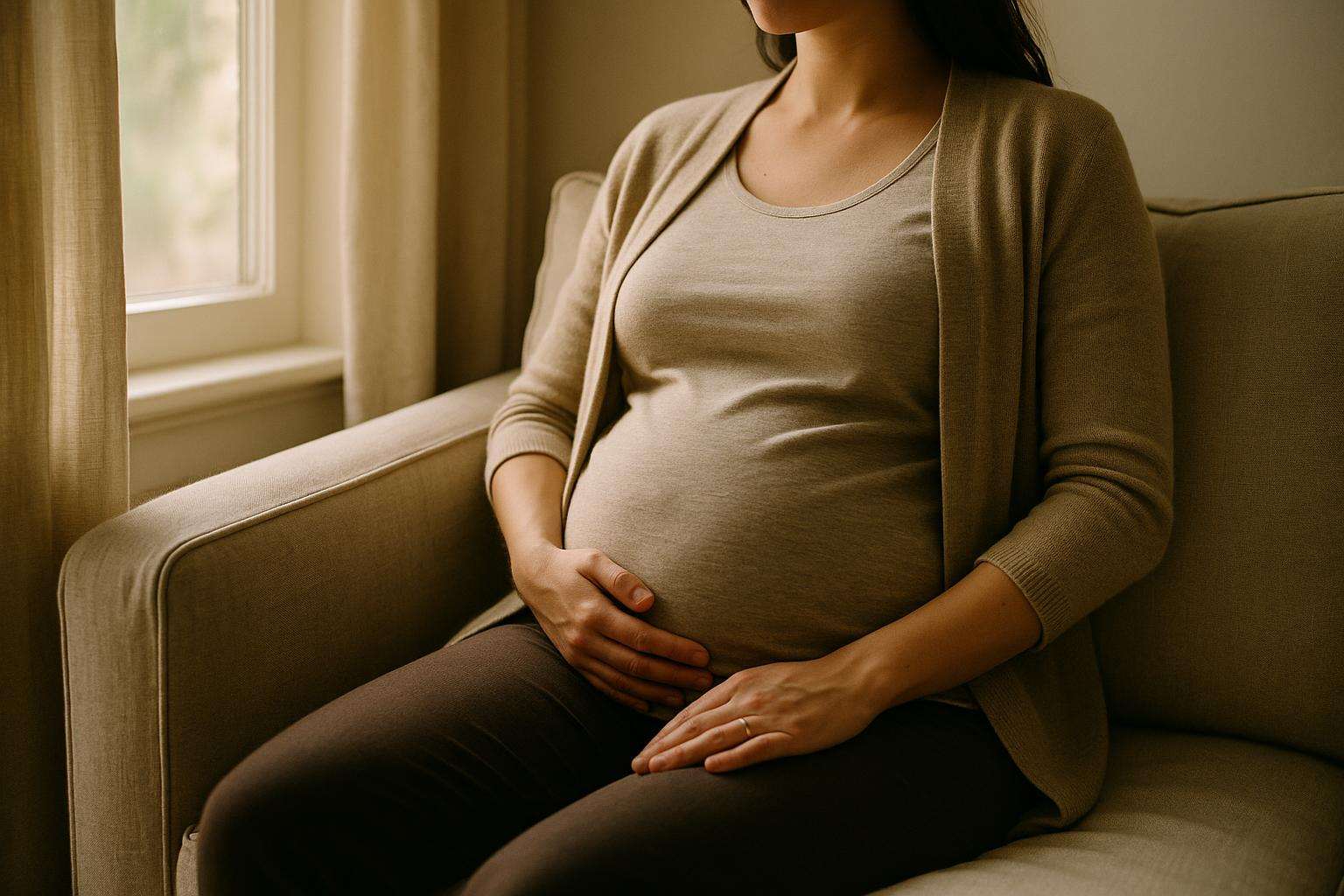
Round ligament pain is a normal second-trimester symptom caused by the pair of ligaments supporting your uterus stretching rapidly as it grows. The pain is sharp, brief, and usually one-sided — most often on the right — and is triggered by sudden movements. It is not dangerous, but it is startling, and there are practical ways to prevent and ease it.
If you are between 14 and 27 weeks pregnant and you have just felt a sudden stabbing or cramping sensation in your lower belly or groin — often while rolling out of bed, coughing, or laughing — you have almost certainly just met your round ligaments. They are two cord-like bands of connective tissue that run from the front of the uterus, through the inguinal canal, and anchor in the labia majora. Before pregnancy, they have very little work to do. From the second trimester onward, they are doing a great deal of work, and they will let you know.
This article provides general educational information, not medical advice. Always discuss new or changing symptoms with your prenatal care provider.
Why does round ligament pain happen during the second trimester?
The uterus grows more rapidly during the second trimester than at any other point in pregnancy. In early pregnancy it fits neatly inside the pelvis; by mid-second trimester it has risen well above the pubic bone and continues upward, reaching roughly to the navel by 20 weeks. The round ligaments must lengthen and thicken to accommodate that expanding load — and that mechanical stretch is the direct cause of round ligament pain.
The right-sided bias that most women notice has a straightforward anatomical explanation: the uterus naturally rotates slightly to the right as it grows (a process called dextrorotation), which places disproportionate tension on the right round ligament. According to clinicians at Northside Hospital's North Pointe OB/GYN Associates, round ligament pain is a normal pregnancy phenomenon that requires no treatment beyond conservative management.
The sharpness of the pain — which can feel genuinely alarming the first time it happens — reflects the sudden nature of the stretch. Ligaments, unlike muscles, have limited elasticity and respond quickly to rapid changes in tension. When you roll over in bed quickly, sneeze, or stand up fast, the ligament is stretched faster than it can accommodate, producing that brief but vivid jolt of pain that typically resolves within seconds to a few minutes.
Pain episodes most commonly arise from:
- Rolling over in bed quickly
- Standing up rapidly from sitting or lying
- Coughing, sneezing, or laughing
- Sudden physical exertion — reaching, twisting, or picking something up
- A baby kick at an angle that shifts the uterus quickly
How do you get relief from round ligament pain at home?
The good news about round ligament pain is that it responds well to behavioral adjustments. Unlike many pregnancy discomforts, this one is often preventable once you understand its mechanics.
Slow down your position changes. This single habit eliminates the majority of episodes for most women. Before rolling over in bed, draw your knees up toward your chest and rotate in two deliberate stages. When you feel a sneeze or cough coming, lean slightly forward to soften the abdominal load before the spasm hits. Give yourself an extra moment before rising from a chair — that pause costs you two seconds and saves you a sharp jolt.
Apply warmth. A warm compress or heating pad on low setting placed over the lower abdomen (not directly on the uterus at high heat) can ease the lingering achiness that sometimes follows an acute episode. Some women find the hot-and-cold gel pack included with the Lola & Lykke support belt particularly useful for this.
Try flexing the hips before the trigger. If you know a sneeze is coming, bending at the hips — slightly hunching forward — reduces the stretch on the round ligaments during the sudden abdominal contraction and measurably dampens the pain response.
Rest when needed. Round ligament pain is not a signal that you have harmed anything, but it is a prompt to rest briefly. Lying on your left side (which also improves uterine blood flow) can help the area settle after an acute flare.
When rolling over in bed, think of it as a two-part sequence: knees up first, then roll. That brief preparation takes tension off the round ligaments before your torso follows. Most of my patients eliminate their nighttime episodes within a few days of practicing this consistently.
Do maternity support belts help with round ligament pain — and which ones are worth buying?
Support belts work by redistributing the weight of the growing uterus across the lower back and abdomen, reducing the mechanical load that the round ligaments are bearing during standing and walking. For many women, wearing one during periods of extended activity — a walk, a long errand, a stretch at work — meaningfully reduces both the frequency and severity of pain episodes.
Several options are consistently recommended by prenatal health professionals and parents who have tested them. The table below summarizes the options most commonly cited in expert roundups, including The Bump's tested review of maternity belly bands.
| Product | Approx. Price | Key Feature | Best For |
|---|---|---|---|
| AZMED Maternity Belly Band | ~$24.99 | Budget-friendly, wide sizing range, easy daily use | Everyday wear, budget-conscious shoppers |
| Belly Bandit Upsie Belly | ~$64.95 | 12 inches of adjustability; grows with you all three trimesters | All-trimester use, active wearers |
| Lola & Lykke Pregnancy Support Belt | ~$65–$80 | Bamboo viscose lining; MadeForMums 2024 Gold Award; includes hot/cold gel pack | Sensitive skin; those wanting included heat/cold therapy |
| KeaBabies Maternity Belly Band | ~$15 | Low-profile, fits under clothing, soft fabric | Discreet use at work or out |
| NeoTech Care Pregnancy Support Belt | ~$14.97 | Reinforced lumbar panel, adjustable straps | Low-back pain alongside ligament pain |
One important wear-time caution: physical therapists and midwives recommend keeping support belt sessions to no more than two to three hours at a time. Prolonged, continuous compression can reduce the engagement of your core and pelvic-floor muscles — the very muscles that should be developing strength to support you as pregnancy progresses. Use the belt for demanding activity periods, then remove it to let your body work on its own. If you are unsure about fit or whether a belt is appropriate for your situation, a pelvic-floor physical therapist can assess your posture and ligament load and make a specific recommendation.
Could anything other than round ligament pain be causing this?
True round ligament pain has a recognizable fingerprint: it is brief (seconds to two minutes), sharp, one-sided or diffuse lower-abdominal, and clearly linked to movement. That pattern is reassuring. But not all lower abdominal or groin pain in the second trimester is round ligament pain, and it is worth knowing the warning signs that warrant a call to your provider.
Contact your OB, midwife, or go to the emergency room if you have any of the following:
- Pain that persists longer than 15–20 minutes and does not ease with rest
- Pain accompanied by fever, chills, nausea, or vomiting
- Any vaginal bleeding or unusual discharge with the pain
- Burning with urination or difficulty urinating (possible UTI or kidney infection)
- Pain that builds gradually over hours rather than coming on suddenly with movement
- Chest pain or shortness of breath alongside pelvic pain
Conditions that can occasionally mimic round ligament pain include ovarian cyst activity (which can occur during pregnancy), symphysis pubis dysfunction (a different type of pelvic girdle pain), preterm contractions, and — rarely — appendicitis, which in pregnancy may present differently than in a non-pregnant person because the appendix is displaced upward by the growing uterus. The brief, movement-linked, self-resolving pattern of round ligament pain is its most distinguishing feature; when pain departs from that pattern, your provider should know.
Does magnesium help with pregnancy muscle cramping and ligament discomfort?
Magnesium does not directly treat the mechanical stretch of the round ligament, but it does address the muscle cramping that often co-occurs with pregnancy musculoskeletal discomfort — and roughly half of pregnant participants in one clinical study had magnesium levels at or below the lower limit of normal.
A randomized trial of 300 mg per day of oral magnesium bisglycinate chelate reported an 86% reduction in cramp frequency and a 69.8% reduction in cramp intensity, as published in PLOS ONE via PMC. Magnesium glycinate is the most commonly recommended form in integrative practice due to its superior GI tolerability compared to magnesium oxide. Dietary sources — dark leafy greens, pumpkin seeds, almonds, avocado, black beans, and whole grains — should be the primary strategy, with supplementation added when dietary intake consistently falls short. Always discuss new supplements with your obstetric or functional medicine provider before adding them to your routine during pregnancy, as individual dosing needs vary.
Round ligament pain is one of those pregnancy experiences that catches almost everyone off guard the first time — and then, once you understand it, becomes surprisingly manageable. Slowing your movement, using a well-fitted support belt during demanding stretches of activity, and building core and pelvic-floor strength with the guidance of a prenatal physical therapist are the three highest-yield strategies. And if you are ever uncertain whether what you are feeling is round ligament pain or something that needs evaluation, your provider would always rather hear from you.
Frequently asked
How long does round ligament pain last?
Individual episodes of round ligament pain typically resolve within seconds to a few minutes after the triggering movement stops. The overall phase of round ligament pain is most pronounced between weeks 14 and 27, when the uterus is growing most rapidly, but flare-ups can recur through the third trimester as the weight load increases further. Most women find that once they identify their personal triggers — quick position changes, coughing, laughing, or rolling over in bed — they can dramatically reduce the frequency of episodes by slowing those movements down. If pain episodes are lasting longer than 15–20 minutes, are accompanied by fever, bleeding, nausea, or urinary symptoms, that is a reason to call your provider rather than wait it out. Northside Hospital / North Pointe OB/GYN Associates notes that round ligament pain is a normal pregnancy phenomenon requiring only conservative management in the absence of warning signs.
Is round ligament pain on one side or both sides?
Round ligament pain most commonly occurs on the right side, though it can be felt on both sides or, less often, predominantly on the left. The right-sided bias is explained by uterine dextrorotation — as the uterus grows, it naturally rotates slightly to the right, placing greater mechanical tension on the right round ligament. Each round ligament runs from the front of the uterus, through the inguinal canal, and down to the labia majora; as the uterus expands, both ligaments stretch and thicken to bear the increasing load. If you are experiencing persistent left-sided or bilateral pain that does not follow the classic brief-and-sharp pattern, or if pain is severe and unrelenting, let your prenatal care provider know — one-sided pelvic pain that builds over hours can occasionally signal other causes that deserve evaluation. North Pointe OB/GYN Associates confirms the right-sided presentation as typical given normal uterine anatomy.
What triggers round ligament pain and how can I prevent it?
The most common triggers are rapid or unexpected movements: rolling over in bed, getting up from a chair too quickly, coughing, sneezing, laughing, or sudden physical exertion. The underlying mechanism is simple — the round ligaments, like any soft tissue under load, react sharply when they are stretched faster than they can accommodate. Prevention is equally straightforward: slow down before you change positions. Before rolling over in bed, draw your knees up toward your chest and turn in two deliberate stages rather than one fluid movement. When you feel a cough or sneeze coming, bend slightly forward to take tension off the ligaments before the spasm hits. A well-fitted maternity support belt worn for one to two hours at a time can redistribute abdominal weight and meaningfully reduce ligament strain during periods of standing or walking. The Bump's tested belly-band roundup covers the leading options at multiple price points.
Do belly bands or maternity support belts actually help round ligament pain?
Yes — when worn correctly and for limited periods, maternity support belts provide meaningful relief. They work by redistributing the weight of the growing uterus away from the round ligaments and the lower back, reducing the mechanical strain that causes ligament pain during standing and walking. Several tested options appear consistently in expert roundups: the AZMED Maternity Belly Band (approximately $24.99) is widely recommended as a budget-friendly everyday option; the Belly Bandit Upsie Belly (approximately $64.95) offers 12 inches of adjustability designed to fit through all three trimesters; and the Lola & Lykke Pregnancy Support Belt — winner of the MadeForMums 2024 Gold Award — adds a soft bamboo viscose lining and an included hot-and-cold therapy gel pack. The key caution: physical therapists and midwives recommend wearing support belts for no more than two to three hours at a time, as prolonged compression can reduce core muscle engagement and affect circulation. Always check positioning with your provider or a pelvic-floor PT. Lola & Lykke's product page details the support-belt design.
When should round ligament pain make me call my doctor or midwife?
Round ligament pain is normal, but certain accompanying signs should prompt a prompt call to your provider rather than self-management at home. Contact your provider if you experience: pain that lasts longer than 15–20 minutes and does not ease with rest; pain accompanied by fever, chills, nausea, vomiting, or diarrhea; pain with vaginal bleeding or unusual discharge; pain with difficulty urinating or burning on urination (which could indicate a urinary tract infection); or chest pain or shortness of breath. Persistent one-sided pelvic pain that differs in character from your usual round ligament flare-ups is also worth reporting — it is uncommon but worth ruling out other causes including ovarian cyst activity, which can occasionally present during pregnancy. The brief, stabbing quality of true round ligament pain that resolves in seconds and relates clearly to movement is its most reassuring feature. North Pointe OB/GYN Associates outlines the clinical distinction clearly for patients.
Can magnesium help with round ligament pain and pregnancy muscle cramps?
Magnesium is not a direct treatment for round ligament pain — which is a mechanical, ligament-stretching phenomenon — but it does address pregnancy-related muscle cramping that often occurs alongside it. Magnesium deficiency increases neuromuscular excitability, and roughly half of pregnant participants in one clinical study had serum magnesium at or below the lower limit of normal. A randomized trial of 300 mg per day of oral magnesium bisglycinate chelate reported an 86% reduction in cramp frequency and a 69.8% reduction in cramp intensity, published in PLOS ONE via PMC. Magnesium glycinate is the form most commonly recommended in integrative practice because it is gentler on digestion than magnesium oxide. Dietary sources — dark leafy greens, pumpkin seeds, almonds, avocado, and black beans — should come first; supplementation is worth discussing with your provider if dietary intake remains low. Always consult your OB, midwife, or functional medicine provider before adding a new supplement during pregnancy.